Friday, October 5, 2012

Behind the Museum Cafe


Omanju
Behind the Museum Cafe, $2.75

Certain things about the Pacific Northwest have helped generations of homesick Japanese visitors and settlers to feel more at home:  the stands of tall, dark cedars, the intricate coastlines with little islands emerging from blankets of haze, the familiar grandeur of Mt. Rainier or Mt. Hood.  

Now add to that Portland's Behind the Museum CafĂ©. 

In the neighborhoods where I lived and worked in Tokyo there was almost always at least one gem of a coffeeshop.  While they varied wildly in style and size, all tended to be tricky to find and strongly atmospheric, with an unusual selection of carefully prepared drinks and food. 

Behind the Museum fits that description--except for it's relatively prominent location in back of the Portland Art Museum.  It's a narrow, high-ceilinged room in a modern glass highrise; a selection of Japanese antiques and contemporary crafts adds warmth to all that chrome. 

Owner Tomoe Horibuchi was a cafe manager and culinary instructor in San Francisco before feeling the pull of the Pacific Northwest.  She's dedicated to cultivating a space that's more than just a cafe, offering exhibition opportunities to artists, tables large enough to accommodate small group meetings, and regular demonstrations of Japanese traditions such as the incense ceremony and calligraphy.  

The cafe serves tea, locally-roasted coffee, Japanese beer and sake.  Appetizers and small meals are made in house, with organic ingredients wherever possible.  In addition to cookies and pastries, Horibuchi handmakes fresh Japanese confections such as the manju of the day above:  a small, soft bird filled with smooth red bean paste and flavored with toasted soybean powder.  

Behind the Museum Cafe 
1229 SW 10th Ave
Portland, OR
503/477-6625

Tuesday, September 25, 2012

Peach Pickles


Peach Pickles

Writing in The Flavor Thesaurus, Niki Segnit observes that, "As a society lady at the turn of the twentieth century, you were nobody until you'd had a peach-based dessert named after you."  She cites Sarah Bernhardt's peches aiglon, singer Blanche d'Antigny's coupe d'Antigny, and the peaches-and-kirsch concoction known as "Princess Alexandra".  

Around the same time but a world away, the women who settled the Pacific Northwest were also intent on peaches and posterity, making summer's bounty last a little longer with the help of peach pickles. Jacqueline B. Williams includes one 19th century recipe in The Way We Ate: Pacific Northwest Cooking, 1843-1900; since it called for nine pounds of peaches and some spices that I don't keep in the pantry, I made a few adjustments.


Peach Pickles

-Wash and dry 1 1/2 lbs of ripe but firm peaches; halve them and remove the pits. 
-Combine 1/2 lb sugar, 1/2c white vinegar, 2 sticks cinnamon, 12 cloves, and 1 Tbs cardamom seeds; bring the mixture to a boil, then lower the heat and reduce the liquid to a syrup.  
-Remove the syrup from the heat and gently add the fruit, stirring to coat. 
-Follow your usual canning procedure or pack the cooled fruit and syrup in a jar and store in the fridge.  
-Eat as-is or with vanilla ice cream, and use the delicious syrup as a dessert topping or drink flavoring.  

Saturday, September 22, 2012

St Demetrios Greek Festival


Bougatsa
St Demetrios Greek Festival, $5

The organizers of the annual Greek Festival at Seattle's St Demetrios Greek Orthodox Church have clearly learned a few things since the festival was first held in 1960.  After fifty-two years, they have celebrating down to a science.  

Entering the festival is like arriving in a foreign country:  exchange some cash for festival tokens and pick up a helpful map.  Get the lay of the land by attending an informative sanctuary tour, then pick up some souvenirs at one of the shops or bookstores.  Having worked up an appetite, chose from sit-down meals in the dining room, beer and snacks at the adults-only tavernas, or coffee and sweets--available by the box from the Agora market or by the piece from the Kafenion

The bougatsa (above) is served warm from the oven, highlighting its great interplay of textures:  crinkly phyllo pastry, creamy custard, and crunchy walnuts.  Also available: 

Baklava:  a sweet sandwich of walnuts, cinnamon, and buttered phyllo, soaked in syrup
Bakalava sundae: a new spin on the old favorite, chopped baklava pastry with espresso, vanilla ice cream, and whipped cream
Kourambiethes:  butter cookies coated in compacted powdered sugar
Kataifi:  shredded phyllo pastry with walnuts, cinnamon, and sugar
Pasteli: candy made from sesame seeds and honey
Galaktoboureko: semolina custard with crispy buttered phyllo, soaked in orange blossom syrup
Koulouraki: pretty braided butter cookies
Melomakarona:  olive oil cookies flavored with orange, brandy, honey, and walnuts
Loukoumades:  doughnuts with honey and cinnamon

Monday, September 17, 2012

Cherry Shrub and Shrubet


Shrub

Acetic acid is powerful stuff, capable of clearing your sinuses, cleaning your bathroom, or transforming bland and perishable cucumbers into zingy pickles with a near-infinite shelf life.   

Along with water, acetic acid is the essential ingredient in vinegar--but it need not be the dominant flavor.  Brewing vinegar directly from tasty ingredients such as fruits and grains ("pure vinegars") or adding these ingredients to vinegar prior to a second, shorter fermentation process ("compound vinegars") can result in something more like a liqueur:  smooth, intense, aromatic, and even drinkable, usually as an apertif, digestif, or diluted into a kind of spritzer.  In many places, that mixture of fruit vinegar and water or soda water is known as "shrub". 

Home-brewed compound vinegars have a long history and after a quiet spell have seen a recent bump in prominence.   Making your own is easy (shrub is the jam of lazy DIYers) and relatively cheap if you use the fecund-est local fruit of the moment (in my case, cherries).  


Cherry Shrub

4 lbs cherries, washed, sorted, stemmed, and pitted
4 c vinegar (I used Bragg's apple cider; depending on your fruit you could use white, balsamic...)
1/2 c sugar (to taste)

-Put the fruit in a large non-reactive pot or several glass jars and add enough vinegar to cover.  
-Let the fruit sit, covered, at room temperature temperature for a week, stirring well each day. 
-On Day 7 or 8, stir in the sugar and heat the fruit to a low boil for about an hour.  
-Remove from the heat and when the mix is cool enough to handle, strain the liquid into clean jars.  Reserve the fruit solids (see below). 
-Mix chilled shrub with water or soda water to taste, or sip straight.  


Bonus:  Shrub-et!

Why waste all that yummy fruit mush?  If shrub makes for a refreshing drink, it's off-the-charts invigorating as a frozen treat.  

leftover shrub fruit (of course this is best done with fruits such as pitted cherries that are entirely edible)
sugar to taste
water
spices and flavorings to taste
approx. 2 T vodka (depending on the volume of fruit)

-If your fruit is chunkier that you like in a frozen dessert, whizz it in a food processor.  
-Add just enough water to dissolve about 1/2 c of sugar; stir, shake in a jar, or heat gently until the sugar grains completely melt.  
-Mix the fruit and syrup.  
-Add any desired spices or flavorings (to my cherry mush I added a little cinnamon, ground cardamom, and black pepper, plus about 1 T of almond extract).  
-Stir in a little neutrally-flavored alcohol to keep the mush from freezing rock-solid. 
-Pour into a plastic tub or bowl and place in the freezer.  To create a softer texture, break up the ice crystals by raking the shrubet with a fork every hour or so as it freezes, then give it a final fluff about 15 minutes before serving. 

For more on shrub's history and resurgence in popularity, check out this NYT article

Saturday, September 15, 2012

Festival of Fruit


Apple Pie
Tillie's Cafe, $3

A local politician, newspaper cartoonist, and professional baker, Andrew "A.W." Piper sounds like the kind of guy I'd welcome getting stuck next to on a long flight.  In 1889 the "Great Fire" that destroyed much of Seattle leveled his bakery.  The Piper family moved further out of town, to a small group of abandoned loggers' cabins, where they planted a large garden and a fruit orchard.  Piper's heirs later sold the land to the Carkeek family, who donated the area now known as Carkeek Park to the city of Seattle in 1927.  

In 1983 the remains of the overgrown orchard were identified on a slope running along Piper's creek.  A team of volunteers have slowly coaxed the apple, quince, and nut trees back to productivity, preserving a juicy slice of Seattle's horticultural past.  

The park now hosts a "Festival of Fruit" each fall, featuring live music, a cider press, fruit tasting and identification, expert lectures, and an apple pie contest.  Additional apple pies are available by the slice from "Tillie's Cafe", a folding table named in honor of the Pipers' daughter.  The Festival also offers the perfect opportunity to walk off some of that pie; hike around the steep slopes of the Pipers' verdant orchard, take in the boozy perfume of the windfall apples, and think about how much has changed in the last 100 years--and how much hasn't. 


Friday, September 7, 2012

Port Gamble Tea Room


Kahlua truffle
For the Love of Chocolate, $2.60

Port Gamble is a 19th century company town that grew up to house and serve the employees of a single dominant industry, the local sawmill.  When that mill finally closed in 1995, after 142 years of continuous operation, the town was able to capitalize on its "frozen in time" appeal.  Although there are less that a thousand full-time residents, tourists regularly fill the parking areas and swarm the sidewalks for special events or fairs, or just for the pleasure of visiting the little shops and restaurants that now occupy the preserved wooden buildings.  

Taste Port Gamble is the superhero of these businesses, a single tidy front that conceals three distinct identities.  By day it's the Tea Room at Port Gamble, offering English-style formal tea options, including chocolate high tea, cream tea, and tea sandwiches; loaner picture hats and feather boas are available for any guests who arrive under-accessorized.  On Friday and Saturday evenings it transforms into Bistro by Night, featuring tapas, schnitzel, salmon, and stroganoff.  And night or day, guests can choose from a variety of flavorful chocolate truffles, made in-house under the For the Love of Chocolate label

Taste Port Gamble
32279 Rainier Street 
Port Gamble WA 
360 / 297-4225


Thursday, September 6, 2012

Blackberry Cafe


Wild Blackberry Crumble
Blackberry Cafe, $6.95

Joyce is a blink-and-you'll-miss-it highway town with one attraction that tempts travelers to pull over:  the deliciously invasivore Blackberry Cafe. 
 

Although Washington state does have indigenous blackberries, those timid natives faded into the background with the introduction of Himalayan and Evergreen varieties in the late 19th century.  The aggressive interlopers were first grown as food crops, but quickly jumped the fence to spread unchecked across the state.  

There are ongoing efforts to eradicate invasive blackberries, but in the meantime they're a dependable source of fat, juicy fruit for the Blackberry Cafe.  The Cafe buys blackberries from the local foragers throughout the summer, stockpiling enough to make it through the winter. 

This
4-year-old establishment isn't shy about its specialty.  The menu features blackberry BBQ sauce, blackberry salad, blackberry vinagrette, blackberry shakes, blackberry lemonade,  and blackberry creme crepes (reminding me of that scene in "Better Off Dead" when the host mother reels of the menu for her French-themed feast:  "French fries, French toast, French dressing...").  The "Fresh from the Oven" baked goods aren't even on the menu; look instead for an up-to-the-minute white board. 

With summer edging into fall, the blackberry crumble is a perfect match for the transitional weather:  warm berries oozing juice as if they'd just come in from the sun, blanketed with comfortingly crispy, buttery oats. 


Blackberry Cafe
50530 Hwy 112 W
Joyce, WA
360 / 928-0141

Friday, August 31, 2012

Warabi Mochi


Warabi Mochi
Tokara, $4

Mochi is one of Japan's staple foods, a rice-based dough that can be eaten sweet or savory.  While most mochi is made from mochigome, a short-grained glutinous rice, other foods that share mochi's characteristic chewiness are sometimes also known as "mochi".  Warabi mochi gets its springy texture not from rice, but from the starch of bracken ferns.  Translucent and slightly slippery, warabi mochi is a classic Japanese summer sweet, the mere sight of which gives some relief from heat and humidity.  Tokara's version is served with molasses syrup and a dusting of kinako, a powder made from toasted soybeans. 

Saturday, August 18, 2012

Shave Ice


Shave Ice
Shabu Chic, $3

Come summer, communities throughout Asia and the Asian diaspora keep their cool by eating man-made snow piled with with their favorite toppings.  In Hawaii, "shave ice" is drenched in neon-colored syrups, while the Japanese cover their kakigori with stewed fruit, rice dumplings, beans, or green tea, the Chinese eat their baobing snowballs with "eight treasures" such as grass jelly or peanuts, and Filipino halo-halo features bright purple ube and decadent flan.  In almost every case, condensed milk is the favored final touch.  

At Seattle's Little Saigon Fest, restaurant Shabu Chic was offering its own take on the pan-Asian treat:  shaved green tea ice with strawberries, mango, and red beans, glazed with a touch of the ubiquitous condensed milk. 

Viking Days


Æbleskiver
Danish Hearth, $3

As populations shift and tastes change, the mark of the Scandinavian cultures that shaped many of neighborhoods on Seattle's north side seems to be fading:  the Van de Kamp's windmill in lower Queen Anne is a distant memory, the Scandinavian Bakery building is now a Thai restaurant, and Scandinavian Specialties is Ballard's last remaining source for Nordic imports

But the frenzy of the Nordic Heritage Museum's " Viking Days" celebration suggested that while those cultures may be less obvious today, they are neither gone nor forgotten.  The Museum's parking lot was crowded with Viking reenactments and historical displays, demonstrations of traditional crafts, retail stalls, and plenty of food.  In addition to the usual beer and grill tents, there were regional "hearths," booths dedicated to the foods of a particular country. 

The Danish Hearth's line was longest and slowest, but it gave customers a front row seat as expert volunteers cranked out the only item on the menu:  Ă¦bleskiver.  Cooked in special cast iron skillets with dome-shaped indentations, these spherical pancakes are served with jam and a sprinkling of powdered sugar (above).


One volunteer worked non-stop to meet the demand for fresh batter (left), which was then passed down the line to the cooks stationed at portable stoves (right).  


Each new batch started with a hemisphere's worth of batter (left).  As the underside of the batter skinned over, the cook used a skewer to lift the cooked section partway out of the pan, allowing more of the uncooked batter to contact the skillet. 


Little by little, the hemispheres became bowls, then Pac-Men (left), then spherical golden-brown æbleskiver.


At the Icelandic Hearth, there were thin slices of vĂ­narterta ($1), sawed off of a towering stack of cardamom shortcake layered with spicy prune jam.  The recipe for "Vienna cake" dates back to at least the mid-19th century, when European pastry chefs began to have access to refined white "Vienna flour."  It's been a popular cake for Icelandic celebrations ever since, with even fancier rainbow-striped versions made by using a variety of different jams.  After the cake is baked and constructed it is wrapped tightly, then set aside to age for up to two months.  


 After running out of Finnish rice pudding early on, the Finnish Hearth substituted a Norwegian almond cake ($1), as moist and rich as slightly aerated marzipan.

Saturday, August 11, 2012

Pabla Indian Cuisine


Mithai
Pabla Indian Cuisine, 6.99/lb

Pabla Indian Cuisine is a restaurant, grocery, and confectionery that traces its roots as a family business back to a restaurant that opened in India in 1947.  The Renton outpost has one big distinction:  its kitchens and products are certified kosher, opening it up to a whole new client base. 

Among the housemade mithai are familiar favorites such as milky rasgulla (top left) and creamy kalakand (top right), as well as confections featuring fruit and nut flavors including cherry (bottom right) and cashew (bottom left). 

Pabla Indian Cuisine
364 Renton Center Way #C60
Renton WA
425/ 228-4625

Friday, August 10, 2012

Reevani


Reevani
Aladdin Falafel Corner, $2

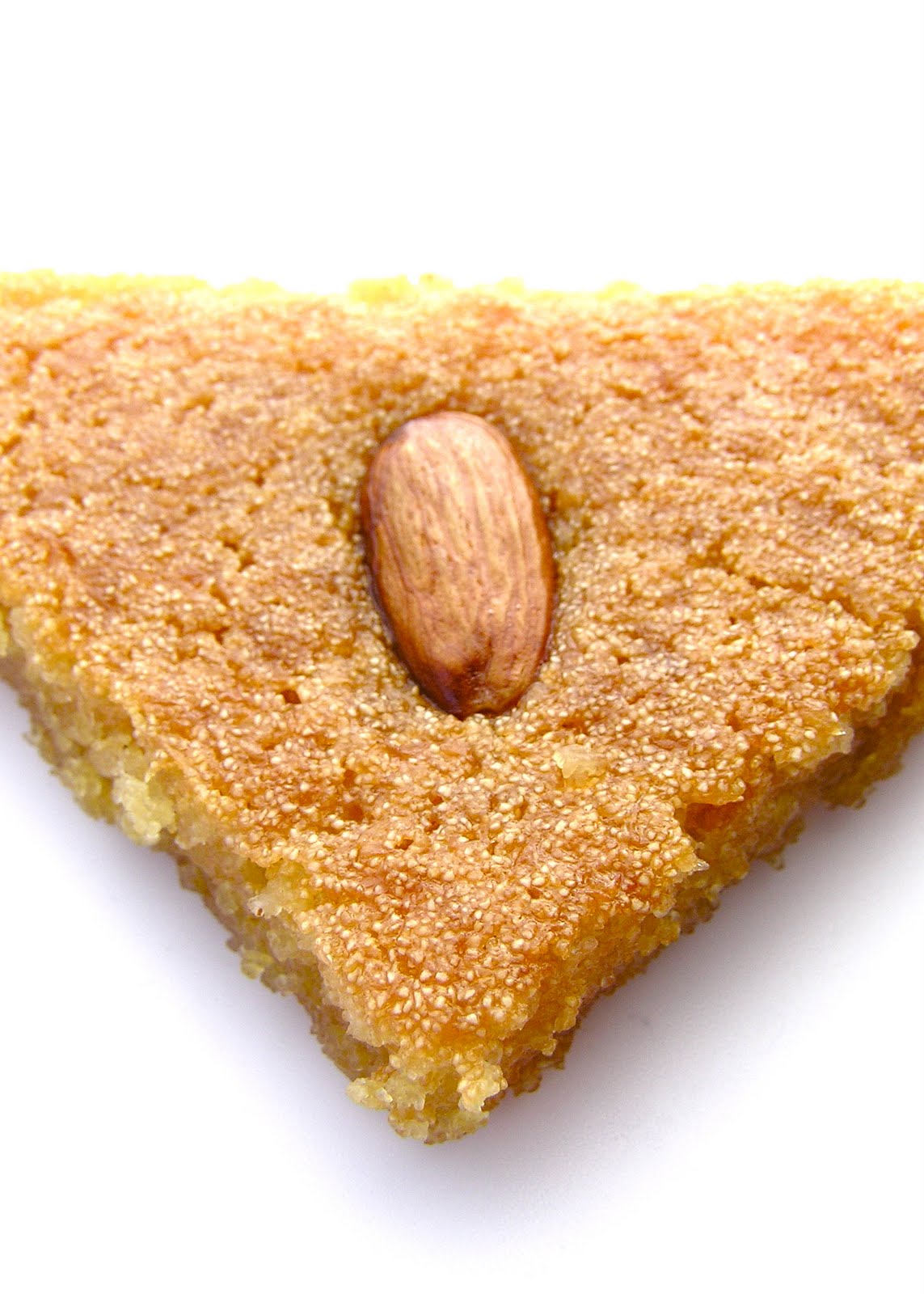
Go to Aladdin Falafel corner for the fresh and flavorful sandwiches but stay for the housemade Persian sweets.  Reevani are golden triangles that get their assertive texture from semolina, a type of course-ground flour more often boiled into submission in hot breakfast cereals.  Honey holds the whole thing together and rosewater elevates it to swoon-worthiness.

Aladdin Falafel Corner
4541 University Way NE

Seattle, WA
206 / 548-9539

Monday, August 6, 2012

Sluy's Bakery


Fatigmand (above)
Pepperkakor (below)
Sluys Bakery


Read more here: http://www.thenewstribune.com/2012/05/18/v-printerfriendly/2149054/where-the-vikings-shop.html#storylink=cp
"Giv os idag vort daglige brod."
                       -Motto on the Sluys' Bakery wall

The Norwegian immigrants who settled the area around Poulsbo in the 1880s were reportedly drawn to the familiar fjord-like contours of its hills, waterways, and distant mountains. 

If their descendants are similarly sentimental, they must be irresistibly drawn to the familiar aromas wafting from Sluy's Bakery in downtown Poulsbo's "Little Norway" commercial district.  Many of the buildings that line the narrow street are embellished with conspicuously Scandinavian touches, but for me it's the chance to "share" an experience with those pioneering Norwegians that breathes life into the town's decorative facades. 

Since 1966 Sluys has been owned and operated by the same local family.  They turn out famous products such as "Troll House" cookies, fresh "Poulsbo" bread loaves, iced sugar cookies shaped like Swedish dala horses, and "Viking Cups"--gargantuan cinnamon rolls smothered in snowdrifts of frosting. 

Pepperkakor (below) are a gingerbread cookie familiar throughout Northern Europe but particularly associated with Sweden and the winter holidays.  Each little square packs such a spicy punch it seems like hydraulics must have been involved in jamming a critical mass of cinnamon, ginger, and cloves into the dough.  The sparkling sugar topping this historic cookie harks back to the days when sugar was a rare luxury, used as a spice or garnish rather than a staple ingredient. 

On the other end of the spectrum are fatigmand (above), a palate-cleansing cookie that seems almost austere by comparison with pepperkakor.  Known as "poor man's cookies", these fried twists are crisp and restrained, relying on frying oil for a touch of richness and on the barest hint of cardamom for flavor.  Like pepperkakor, fatigmand are made in many countries, but they are most strongly linked to Norway, a country that only gained its independence from Sweden in 1905 and was known as Europe's third-world country for much of the 20th century.  Fatigmand are an edible reminder of the conditions that drove Poulsbo's founders to strike out in search of new opportunities. 

Sluys Poulsbo Bakery
18924 Front St NE
Poulsbo, WA
360/779-2798

Butterscotch Budino


 Butterscotch Budino
The Loft (at Latitude Forty Seven Seven),  $5

The Loft's butterscotch budino (Italian for "pudding") is a rich custard made in-house with generous amounts of butter and brown sugar, served with caramel sauce, whipped cream, and a sprinkle of fleur de sel

The Loft (at Latitude Forty Seven Seven)
18779 Front St
Poulsbo, WA
360/625-0224

Niederegger Eierliqueur Marzipan


Niederegger Eierliqueur Marzipan
Marina Market, $5.50

Although it looks like a typical convenience store from the outside, the Marina Market in downtown Poulsbo is more of a candy convention center.  Begun in 1998 with the intent of providing the area's many Scandinavian, Dutch, and European residents with the tastes of home, Marina Market offers a wide range of specialty food, with an emphasis on sweets.  The shelves of the "Licorice Shrine" groan under the aggregate weight of nearly 400 different kinds, sourced from all over the world (this selection which may soon earn Marina Market a spot in the Guiness Book of World Records).

The Market also carries a vast stock of old-fashioned and foreign candies and chocolate bars, including a range from Niederegger, a renowned German confectioner in business since the early 19th century.  Niederegger is particularly famous for its marzipan, a paste of almonds and sugar that can stand on its own in sculpted sweets, or act as a filling in pastries or bars.  Inside the bittersweet chocolate bar above, marzipan is combined with eierliqueur (aka avocaat), a German egg-based liquor.

Marina Market
18882 Front St NE
Poulsbo, WA
360 / 779-8430