Showing posts with label cake. Show all posts

Saturday, June 24, 2023

Matsukaze


Matsukaze

¥970 / box of 10 pieces 

On my first morning in Kyoto and I headed out early enough to see tiny school children delightedly greeting their classmates and elderly joggers charging up miniature Mt. Funaoka. As I wandered east past the Daitokuji complex, I spotted a building across the street with all the classic indicators (weatherbeaten wooden sign, sliding doors, minimalist display window, verdigris lamp) that something inside is both edible and old-fashioned. 

Approaching the window I saw a hanging scroll, a single peony, and a plate with two slices of cake and a hand-painted label. Among the jumble of kanji were two that I could make out: “pine” and “wind.” And just then, through the fabric of my mask, I caught a whiff of something rich, sweet, and a little funky! 

The 250-year-old confectionery Matsuya Tobei is famed for matsukaze (“wind in the pines”) an unusually savory cake made from flour, sugar, malt, white miso, salted soybeans, and sesame seeds. The miso already nudges this moist, dense cake in a distinctly umami direction, but then it’s topped with fermented, salted black soybeans called Daitokuji natto (a “dry” natto, so no slime in sight). As an emotional eater, I am not unfamiliar with the taste of tear-soaked cake, and that’s the closest comparison I can offer. 

Matsukaze is used in autumn for tea ceremony but is very nice with coffee at any time of the year—and thank goodness! As it’s only sold by the box, I had a little more than I could handle and was able to distribute the excess at breakfast at my guest house. People from 5 different countries agreed: matsukaze was unlike any cake they’d ever had before. 


Matsuya Tobei 

Daitokuji Kitaoji, Kita-ku (in front of Daitokuji-mae bus stop) 

075-492-2850


Thursday, January 9, 2014

Egyptian Date Cake


Egyptian Date Cake

Spellchecker may object to my saying so, but many traditional Egyptian sweets are what you might call desert desserts, based in large part on sweet crops like apricots, grapes, and dates that thrive along the damp margins of the Nile in what is otherwise a hot and arid environment.

In their A World of Recipes: Egypt, Sue Townsend and Caroline Young give this recipe for a spongy, spicy Egyptian date cake:

11oz/325g fresh dates, pits removed

5oz/150g blanched almonds
4oz/100g soft brown sugar
1 orange, washed
4 eggs¼ c superfine granulated sugar

½ t ground cardamom
1 ½ oz/40g butter
3T cornstarch
1t confectioners sugar

Butter a a 9” springform pan and line the bottom with parchment paper.

In a food processor, blend the almonds and brown sugar until coarsely chopped; add the dates and blend until finely chopped, but not ground.

Grate the orange rind, then squeeze one half of the orange.

Separate the eggs and whisk the whites into soft peaks.

Beat the yolks with the granulated sugar and cardamom; add the date mixure, orange rind, 1T of the orange juice, and the cornstarch.

Gently fold the egg whites into the date mixture.

Spoon the batter into the pan and bake 35-45 minute at 400/200 degrees until the cake springs back with pressed.

Dust with confectioners sugar before serving.

Thursday, October 10, 2013

Mom's European Food & Deli


Russian Mini Chocolate Bars
Mom's European Food & Deli, $6.99/lb

Soap Lake is a tiny town in central Washington built around a lake long famed for the healing properties of its foamy waters and slimy mud.  Modern environmental factors have put a dent in those powers--and in the number of tourists visiting the town's spas and resorts.  From the car I saw two going-out-of-business sales, several vacant storefronts, and the empty lot where town boosters had once planned to erect the world's largest lava lamp.

There was no one else in sight when I parked by the public swimming area just a block from downtown, rolled up my pants, and waded into the shallow, slightly effervescent water.  There was no one in sight as I stood ankle-deep in mud, creamy and insubstantial as Cool Whip, and wondered what it would be like to live here. 

I was starting to get a little spooked when a stroll down main street finally filled in a few of the blanks.   As I passed a strikingly well-stocked yarn store, there was a flurry of activity; car after car pulled up and a dozen chatty women got out carrying snacks and projects for the weekly "stitch and bitch."  

At the other end of the street, I found Mom's European Deli, a strikingly well-stocked emporium of foods from Russia and the Baltic region--deli staples like meat, cheese, and specialty breads, but also row upon row of sweet snacks.  The dozens of individually wrapped hard candies, caramels, and nutty little dark chocolate bars  (like Clumsy Bear, Nut Cluster, Kara Kym, above) are sold pick-and-mix style by the pound, as is sesame and sunflower halva, cut to order from huge marbled blocks.  There are also sweet drinks, boxed cookies, and bags of confections like zephir, a pastel hybrid of marshmallow and divinity.   The cold case is stocked with fresh cakes from Russian bakeries on the east coast, carried back by long-haul truck drivers returning from a New York run.  

The beach may no longer be bustling, but an unexpected bounty of beautiful yarn and Russian treats prove that there's still life, creativity, community, and celebration behind Soap Lake's hard-luck facade.   

Mom's European Food & Deli
331 Main Ave E
Soap Lake WA
509/246-1121


Sunday, September 1, 2013

Pink Radio Cake


Pink Radio Cake
Fido, $4.25

A beet bonanza several years ago led Fido's pastry chef to experiment with using beet puree to add subtle flavor and not-so-subtle color to the coffeeshop's standard cake recipe.  The resulting "pink radio cake" is sort of a dialed-down red velvet:  cake moistened with buttermilk, oil, and vinegar and held together with cream cheese icing the color of a Barbie birthday party.  

Judging from other pictures I've seen online, some batches are definitely beetier than others, with one or more of the cake layers looking like a wedge of rouge.  Maybe it's a seasonal thing? 

Nostalgic old-Nashville aside:  I can so clearly remember the building's previous life as Jones' Pet Shop, where the puppies in their tiny cages were both adorable and pitiful, impossible not to look at.  

Fido 
1812 21st Ave S
Nashville TN
615/777-3436

Saturday, June 22, 2013

El Zocalo Tortas and Bakery

 
El Zocalo

The nice young woman behind the counter warned us that the tortas might be bigger than we were used to, but I was skeptical.  Minutes later, I learned my lesson: biggest Mexican sandwich ever = no room for dessert.  

It hurt even to look at the racks of fresh cakes, cookies, and breads surrounding the dining room.  And I'm not the first to feel that way, judging by the fact that El Zocalo pre-packages to-go cups of its tres leches, diced cake soaked in evaporated and condensed milk, mixed with pineapple chunks and strawberry gel, topped with whipped cream, sprinkles, and a strawberry:  dessert for the road.

El Zocalo Tortas and Bakery
701 S 38th St
Tacoma WA 
253/474-9000 

Sunday, June 9, 2013

Budapest Bistro and Schnitzel House


Cheese Pocket and Almond Cookie (top)
Cheese Strudel (below)
Budapest Bistro and Schnitzel House

Growing up in Hungary in her grandparents' home taught Elizabeth Muszka a particular kind of self-reliance.  Since there wasn't much money to spare on restaurants or fancy ingredients, Elizabeth learned young that in order to eat well, they had to cook well. 

Today the owner of Mukilteo's Budapest Bistro and Schnitzel House specializes in Hungarian, German, and Gypsy dishes--and in cooking well.  Starting with traditional recipes and simple ingredients, Elizabeth lavishes attention on each item. 

The pastry case stuffed with fresh zserbo (apricot-walnut-chocolate pastry), dobos torte (layered sponge with chocolate and caramel), sour cherry cake, German chocolate cake, strudels (below), and cookies (above) is even more of a marvel when you consider that the strudel dough alone takes three hours to make.  


But for ex-pats who hunger for something other than home cooking, Elizabeth also stocks a large selection of packaged European candies and treats (below).   

Budapest Bistro and Schnitzel House
12926 Mukilteo Speedway
Lynwood WA
425/513-9846


Friday, May 17, 2013

Bløtkake


Bløtkake
Nordic Heritage Museum, $4

In honor of the Syttende Mai constitutional holiday, many Norwegians work up an appetite by parading through the streets carrying the national flag, then sit down to a well-deserved slice of bløtkake, the beloved "wet cake" whose patriotic layers of white sponge, whipped cream, and strawberry jam echo two of the Norwegian flag's three colors. 

Thursday, March 21, 2013

Cakes of Paradise


Rainbow Cake
Cakes of Paradise, $3.95/slice

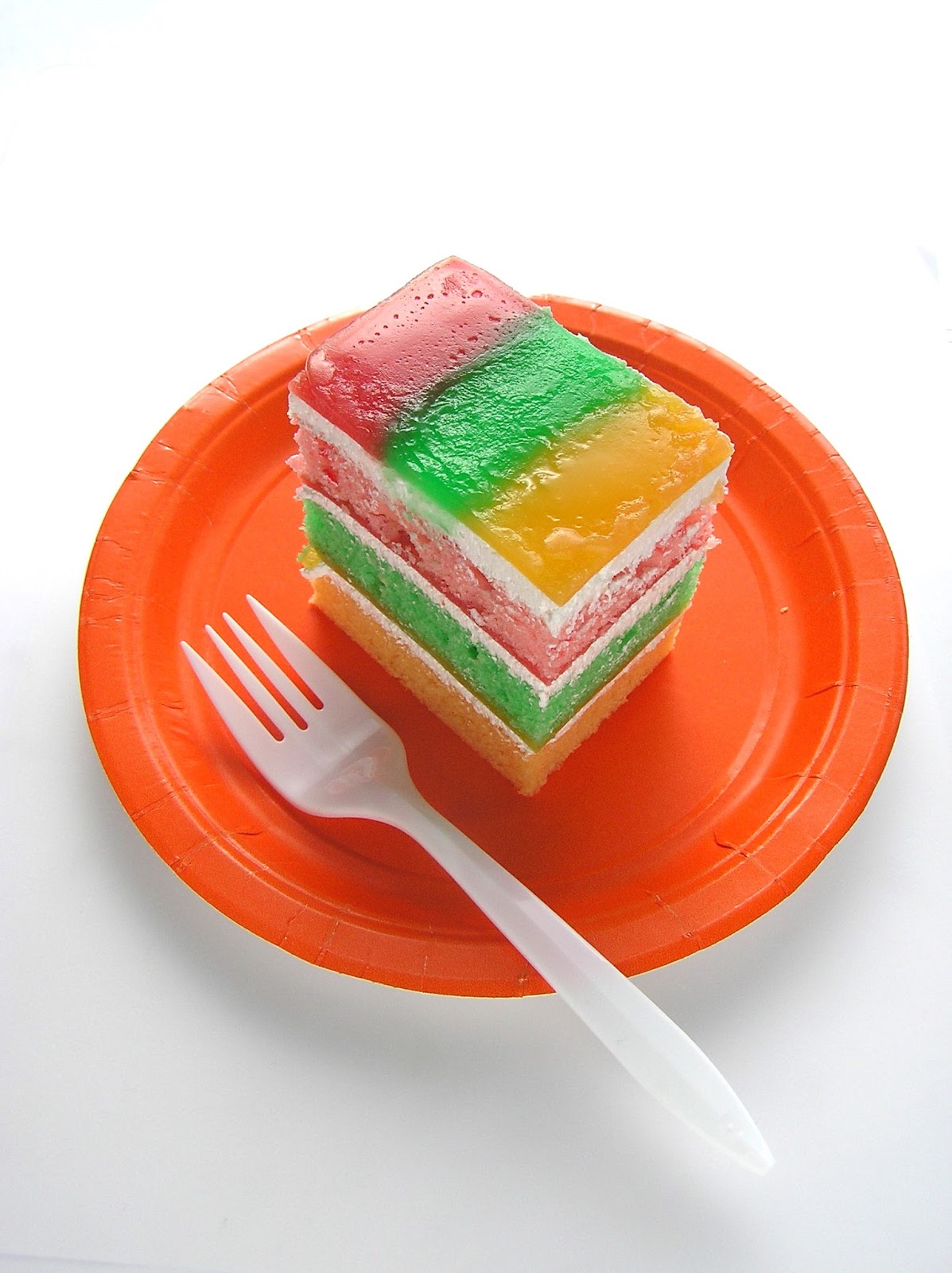
Sink your fork into a little Aloha at either of Cakes of Paradise's two area locations.  Hawaiian baker Mary Buza-Sims' personal recipes were the starting point for this family business now run by her nephew and two sons.  The light, flavorful cakes feature tropical flavors like pineapple, passion fruit, and coconut.  Three-layer Rainbow Cake combines strawberry, lime, and orange cake, with guava, lime, and passion fruit topping.  You can pick up a slice or order a full sheet, which comes decorated with a fresh orchid. 

Cakes of Paradise 
Georgetown
6322 6th Ave S
Seattle, WA
206/763-1151

East Valley Business Park
281 SW 41st Street
Bldg # 13 East
Renton, WA
425/282-4972

Friday, December 28, 2012

Medovik Torte


Medovik Torte
European Foods, $7.49/lb

Although honey, sugar, and "sweetener" sit side-by-side on most coffee shop counters, each flavor represents such a different stage of human history that a book I'm reading distinguishes between the Ages of Honey, Sugar, and Science. 

The use of honey predates written history, and versions of honey cake are known from ancient Greece and Egypt.  In many parts of Europe, the baking of honey-rich breads and cakes was first associated with religious communities and then with regulated guilds.  In the middle ages in Slovenia, artisan bakers specialized in honey cake, and their daughters' dowries were barrels of cake dough with a 30-year shelf life.  

With the arrival of industrialization, sugar took a big slice out of honey's market share, but areas of eastern Europe have seen a recent revival of honey-infused foods.  The Czech or Slovakian medovnik is a decorated sweet bread, often heart-shaped and given as a sentimental gift.  The Polish miodownik or Russian medovik torte is sophisticated party fare; thin cakes of honey sponge spackled together with creamy caramel frosting and flocked with a fuzzy layer of its own crumbs.  

What these cakes have in common with each other and with those barrels of Slovenian dough is a remarkable longevity, thanks to honey's humectant and anti-bacterial properties.  Decorated medovnik bread harden into long-lasting decorations while mature medovik torte develops a richer flavor and more delicate texture--allowing Seattle's European Foods to import perfectly edible cake all the way from an East Coast bakery. 

European Foods
13520 Aurora Ave N
Seattle WA
206 / 361-2583

Saturday, August 18, 2012

Viking Days


Æbleskiver
Danish Hearth, $3

As populations shift and tastes change, the mark of the Scandinavian cultures that shaped many of neighborhoods on Seattle's north side seems to be fading:  the Van de Kamp's windmill in lower Queen Anne is a distant memory, the Scandinavian Bakery building is now a Thai restaurant, and Scandinavian Specialties is Ballard's last remaining source for Nordic imports. 

But the frenzy of the Nordic Heritage Museum's " Viking Days" celebration suggested that while those cultures may be less obvious today, they are neither gone nor forgotten.  The Museum's parking lot was crowded with Viking reenactments and historical displays, demonstrations of traditional crafts, retail stalls, and plenty of food.  In addition to the usual beer and grill tents, there were regional "hearths," booths dedicated to the foods of a particular country. 

The Danish Hearth's line was longest and slowest, but it gave customers a front row seat as expert volunteers cranked out the only item on the menu:  æbleskiver.  Cooked in special cast iron skillets with dome-shaped indentations, these spherical pancakes are served with jam and a sprinkling of powdered sugar (above).


One volunteer worked non-stop to meet the demand for fresh batter (left), which was then passed down the line to the cooks stationed at portable stoves (right).  


Each new batch started with a hemisphere's worth of batter (left).  As the underside of the batter skinned over, the cook used a skewer to lift the cooked section partway out of the pan, allowing more of the uncooked batter to contact the skillet. 


Little by little, the hemispheres became bowls, then Pac-Men (left), then spherical golden-brown æbleskiver.


At the Icelandic Hearth, there were thin slices of vínarterta ($1), sawed off of a towering stack of cardamom shortcake layered with spicy prune jam.  The recipe for "Vienna cake" dates back to at least the mid-19th century, when European pastry chefs began to have access to refined white "Vienna flour."  It's been a popular cake for Icelandic celebrations ever since, with even fancier rainbow-striped versions made by using a variety of different jams.  After the cake is baked and constructed it is wrapped tightly, then set aside to age for up to two months.  


 After running out of Finnish rice pudding early on, the Finnish Hearth substituted a Norwegian almond cake ($1), as moist and rich as slightly aerated marzipan.

Sunday, April 22, 2012

Verdens Beste Kake


Verdens Beste Kake
Scandinavian Specialties, $3.75

Too many hours of cooking shows have trained me to equate quality with complexity: flavors aren't flavors unless they're squired by at least a dozen partners, textures aren't worth their weight unless they're tussling against crunchy toppings, runny reductions, and chunky compotes.

This might be why a particular item at Scandinavian Specialities pulled me up short. Verdens Beste Kake translates to "World's Best Cake," but it wasn't the boast alone that got to me: it was the combination of superlative and simplicity. As the menu sums it up, Verdens Best Kake is no more or less than "Almond meringue with vanilla cream." Baked in large sheets, the crunchy almond-topped meringue becomes the "bread" for this simple sandwich, slathered with at least an inch of thick, cool, sweetened cream.

The cake first appeared in northern Norway in the 1930s, and was then known as Kvæfjordkaka, after the local fjord. From there, the recipe gained ground and popularity, earning first its impressive new name, and then, in 2002, recognition as the official cake of Norway.

6719 15th Ave NW
Seattle WA
206/784-7020

Wednesday, February 15, 2012

The Cake Cafe


Cupcake
The Cake Cafe, $1 with meal purchase

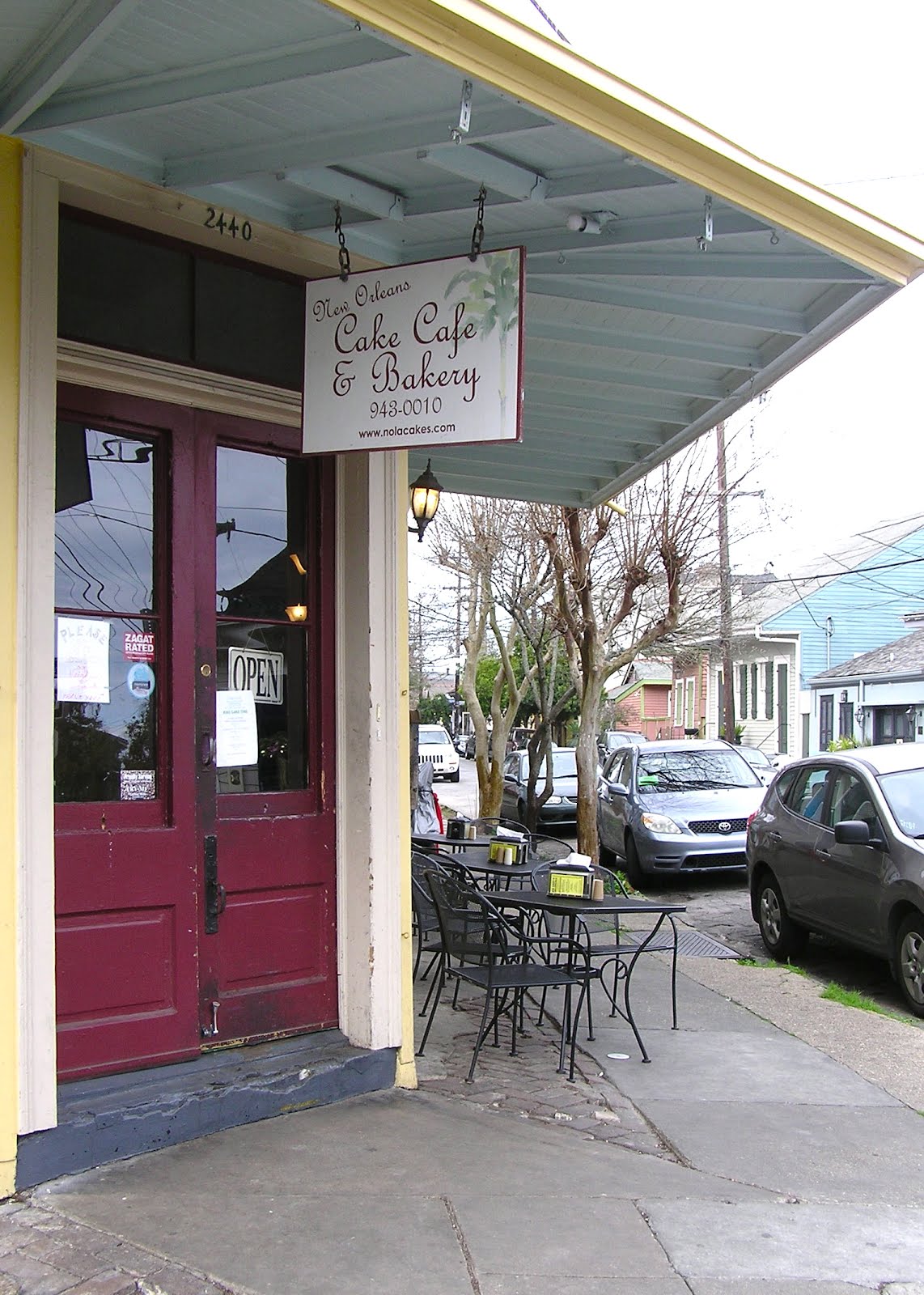
It was an offer I couldn't refuse. After I ordered my meal at the New Orleans Cake Cafe & Bakery, the woman behind the counter asked if I wanted a cupcake with that. For only a dollar more I could take my pick from a broad glass case filled with fat, frosted cakes.

The only catch? I was ordering breakfast. For a few seconds I held a silent debate.

The outcome? I can now say that cake goes just fine with grits.

Cake Cafe founder Steve Himelfarb first came to New Orleans to work as recording engineer, but eventually realized he was happier baking. He started out selling sliced of his homemade chocolate cake door-to-door, then to order, then from a small storefront in Exchange Alley. Just about a year after the bakery opened, Katrina hit. Himelfarb spent some time managing a restaurant in New York, but was back in New Orleans as soon as he had the chance, re-opening the bakery in a larger space in the Faubourg Marigny. The cafe is now the kind of neighborly place where people share tables when the free coffee refills and $1 cupcakes result in full-capacity crowds.

After making up my mind to have a cupcake, I was faced with an even more difficult choice: chocolate, red velvet, or wedding? I went with the "wedding" cupcake, a chubby puck of soft white cake crowned with a rich buttercream frosting saturated with swoon-inducing almond extract.

The New Orleans Cake Cafe & Bakery
2440 Chartres St
New Orleans, LA
504/943-0010

Monday, July 11, 2011

Hello, Cupcake


Mocha Cupcake
Hello, Cupcake, $2.55

Although cupcakes are redolent of childhood innocence, birthday parties, and bake sales, there's still something about them that can also be quite grown-up, feminine, and even flirtatious.

Tacoma's Hello, Cupcake bakery teases out the sultry side of this popular treat. Their small, moist and flavorful cakes are topped with sculptural heaps of frosting, like an abstract homage to a woman sashaying down the street in a swingy skirt. Most flavors are further accessorized with finishing touches; the mocha (above) is crowned with a chocolate coffee bean, the seasonal banana split (below, center) attracts attention with a sweep of chocolate syrup and a glossy maraschino cherry.

Hello, Cupcake also offers a event room and an enticing decorating party package: $10 per person for two cupcakes and two hours in which to pile them high with frosting, frills, and furbelows.

Thursday, May 5, 2011

Dutch Bakery


Dollar Roll
Dutch Bakery, $2.25

Sometimes stepping through a doorway can be almost like traveling back in time; think of 1950s diners, Gothic churches, Colonial Williamsburg, or Cracker Barrel restaurants.

Particularly evocative are those rare places that owe their anachronistic atmosphere to genuine continuity, rather than to revival, recreation, or re-enactment. Places like Victoria, BC's Dutch Bakery.

Funnily enough, when Dutch migrants Kees and Mable Schaddelee opened Dutch Bakery back in 1956, it was a high tech vision of the future. Unsatisfied with the commercial baking equipment available in Canada, Kees had the latest technology shipped over from Europe: ball-bearing rolling pins, a mechanical dough divider, a dough spreader capable of handling 2,000lbs per hour. His attention to innovation and detail extended to the retail area, which was fitted out with the best booths, stools, and display cases available--as well as Victoria's first air conditioning system.

Little has changed in subsequent years, but the Dutch's innovations have slowly mellowed into quaintness. The decor is the same, the recipes are the same, but what seems most significant is that many of the people are the same. Kees continued to bake until in his 70s and hung around the coffee shop up until his death at age 97. His four sons and several daughters-in-law joined the business, as did many of their children, four of whom now run the show. A few other non-Schaddelee employees have been with the bakery for more than 30 years.

The same holds true for the patrons. Although in its heyday the Dutch's coffee shop served about a thousand customers every weekday, patrons never felt rushed, and many made Dutch Bakery a daily or weekly habit. It's still one of those places where it seems like 90% of the people know--and like--each other.

On the strong recommendation of an elderly couple at the next table, I had a strawberry shortcake (only available in season) and the dollar roll, a signature sweet of rolled-up sponge and buttercream swaddled in housemade marzipan: soft, sweet, and surprisingly light. Other pastry options include Parliaments, Flying Saucers, Deer Legs, and Sacher Torte. Takeaway pastries, cakes, cookies and chocolates are also available, displayed in the Dutch's original wood and glass cases.

Dutch Bakery
718 Fort Street
Victoria, BC
250/385-1012


Friday, March 4, 2011

Strawberry Shortcake


Strawberry Shortcake
Fumie's Gold, $3.75

Pastry chef Fumie Kumagai makes what one of my friends in Japan calls "OL cakes": light, dainty, and impeccable treats that a slim, dainty, and impeccably groomed "office lady" could enjoy on her afternoon break without ruining her appetite for dinner. Kumagai's bijou bakery in downtown Bellevue features classic American and European pastries given an appreciable Japanese twist (e.g. Swiss roll with matcha, Mont Blanc with red beans). Even without any exotic ingredients, the strawberry shortcake was nothing like my mother makes; it was barely sweet, as creamy as a cow, and so light it seemed to levitate onto my fork.

The one thing that Fumie's Gold lacks is seating. Not being particularly dainty myself, I decided to have a shortcake picnic in the large park across the street. It started to drizzle just as I tucked in so I was able entertain several joggers-by with my attempts to juggle cake, umbrella and spork. I left behind a dry seatprint and, sadly, a plop of snow white whipped cream; I looked back at the bench just in time to see both marks disappear in the rain.

10045 NE 1st St
Ste CU2
Bellevue, WA
425/223-5893

Wednesday, February 2, 2011

Matsukaze


Miso Matsukaze Cake

Matsukaze is a Japanese expression that describes the rustling sound made by wind blowing through pine trees. It is also a tea ceremony term, referring to the whisper of water in an iron kettle reaching the correct temperature for tea.

Matsukaze is also the name of this simple steamed cake. The secret ingredient is miso, a salty, pungent paste of fermented soybeans that is more usually used for soups, sauces, and marinades. Like meat, truffles, and seaweed, miso is intensely umami, the term used by the Japanese for that "fifth flavor," a savory quality that imparts a feeling of satisfaction.

Although matsukaze is relatively light, containing no butter, egg yolks, or oil, the addition of miso gives it a strangely meaty richness. Thanks to the steaming process, matsukaze's texture is also something you can really get your teeth into; think sweet-salty foam rubber.

Miso Matsukaze Cake
from Masako Yamoko's First Book of Japanese Cooking

2 Tbs low to medium sodium miso
1 c sugar
2 egg whites
1 1/4 c flour
1 tsp baking powder

-prepare a small cake pan by lining it with parchment or coating with butter and flour.
-preheat oven to 400F.
-mash the miso into the sugar, then add a scant cup of water and whisk until there are no lumps.
-beat eggs into stiff peaks. fold into the miso.
-sift flour and baking powder together. sift again into the egg/miso mix. blend well.
-pour batter into the prepared pan. cover with foil and pierce with several holes.
-place the cake pan inside a larger pan with an inch or so of hot water.
-bake around 50 minutes, or until it passes the toothpick test.
-for a brown top, remove the foil for the final 15 minutes, or grill the cake, top down, in an oiled skillet.
-serve hot or at room temperature.

Tuesday, September 14, 2010

Simply Desserts


Bittersweet Hazelnut Cake
Simply Desserts, $4.65

Why would a bijoux cake shop known for scratch baking and all-natural ingredients insist on using flimsy paper plates and plastic utensils? Maybe the on-site bakery is just too full of old-fashioned layer cakes to leave room for dishes. Or maybe it's more calculated than that. The miniature paper plates seem to cower under their oversized burdens, making the slices appear even more generous by comparison. And the plastic forks, straining against the weight of cake and frosting, underscore their hefty moistness.

My dark chocolate slice was a winner--studded with toasted hazelnuts and slathered with fudgy frosting--but I bet you couldn't go wrong with Red Velvet...or Mexican Chocolate...or Blueberry Lemon...

If you're tempted to visit, plan ahead: Simply Desserts only accepts checks and cash.

Simply Desserts
3421 Fremont Ave North
Seattle, WA 98103
206/633-2671

Wednesday, May 26, 2010

Cakepops


Cakepops

Catherine Grisez is a Seattle artist known for her ability to turn seemingly intractable sheets of metal into forms so full of life that they appear to flow, swell, pulse, or grow.  Perhaps it shouldn't come as a surprise, then, that one of her hobbies involves giving form and personality to another challenging material: cake.

The process of creating cakepops, as I understand it, goes something like this:
   bake a cake
   pulverize it
   use frosting to glue the bits back together
   form the mix into balls
   jam in a stick
   dip in chocolate
   decorate to the full extent of your artistic ability.

Finally, kick back and enjoy the fireworks as grown women tussle over who gets the cutest cakepop.

Want to see what everyone else is eating?  Check out WanderFood Wednesday....