Showing posts with label Italy. Show all posts

Wednesday, May 8, 2013

Cle Elum Bakery


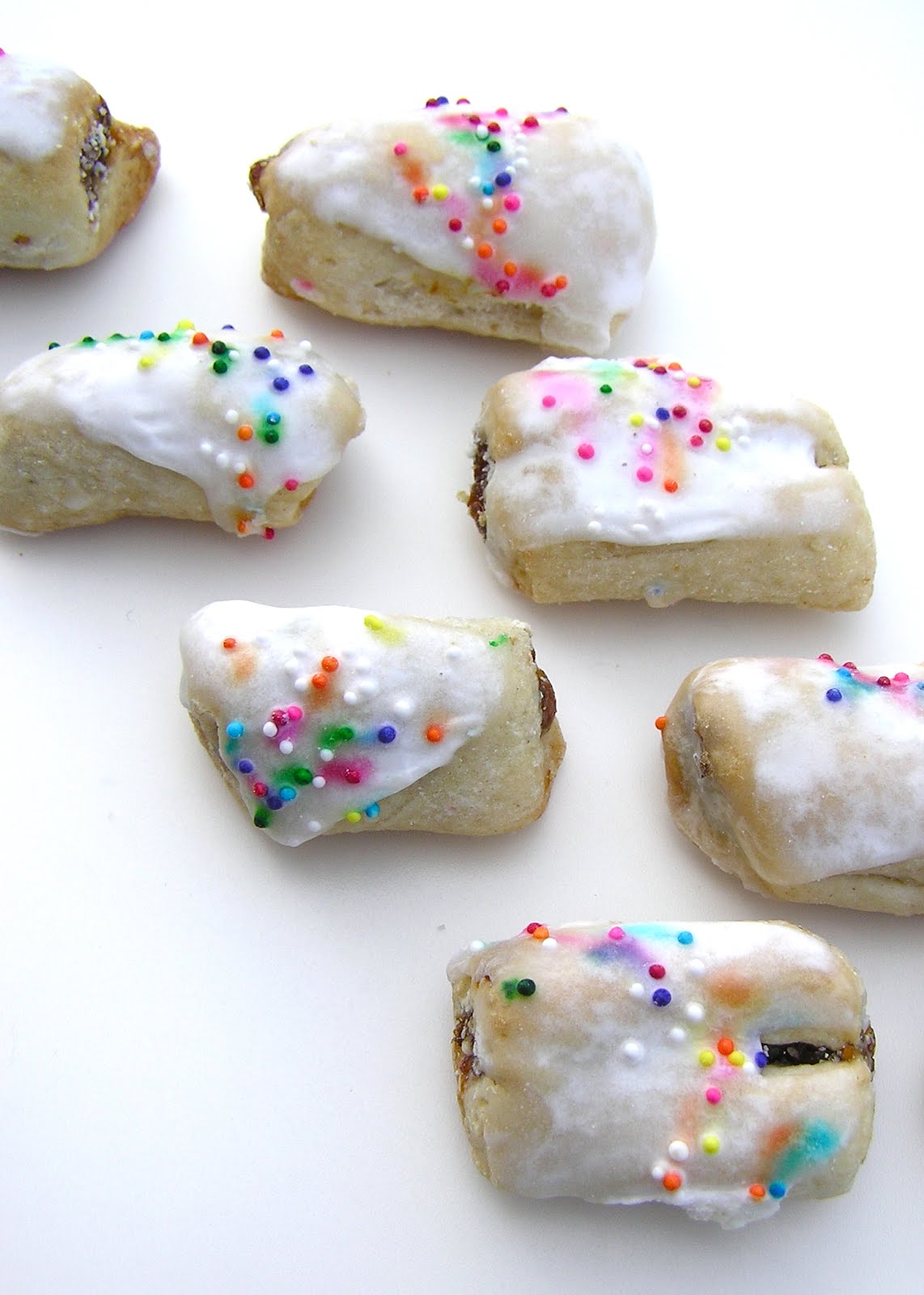
Torchetti
Cle Elum Bakery, $.90/each

Founded in 1906, the Cle Elum Bakery still relies on its original brick bread oven and several of the recipes the original brought with him when he came over from Italy.  Among these, the popular torchetti cookie:  "Italian Pastry made with Butter, Yeast, and Spices.  Enjoy with Coffee, Tea or dipped in Red Wine."

The Osmanovich family bought the bakery in 1947 and it is still run by their descendants.  They were probably responsible for introducing the "divinity" cookie ($.75/each), a meltaway cloud of shortening, powdered sugar, and nuts similar to cookies found in Russia, Greece, and Mexico.  

Cle Elum Bakery 
501 E 1st St 
Cle Elum, WA
509/674-2233


Saturday, October 20, 2012

Amaretti Morbidi


Amaretti Morbidi
World Market, $3.99/box

Amaretti morbidi:  what a great expression!  Alas, instead of being death-obsessed little goth biscuits, these are soft-textured versions of the classic Italian cookie.  

Although almonds are often substituted, the primary ingredient in old-fashioned amaretti is apricot kernels; "amaretti" refers to a slight bitterness that comes from the kernels' natural cyanide content.  

Legend has it that when the Cardinal of Milan made an unexpected stop in the town of Saronno in the early 18th century, one devout young couple whipped up these cookies with the only ingredients they happened to have on hand:  apricot kernels, sugar, and egg whites (one wonders what they were planning to have for dinner...?).  Presented in colorful paper twists, the cookies were a hit and the couple's descendants have been making them ever since; their company, Chiostro di Saronno, is still based in the cloisters of a former monastery in central Saronno.  

Other competitors have been producing amaretti for nearly as long, with Lazzaroni being perhaps the best known internationally.  Lazzaroni has been a pioneer in both manufacturing and marketing, industrializing the production of its cookies in the 1800s and shipping its products in eye-catching packages since 1888.   

Most amaretti are hard enough to shatter when bitten, unless dunked first into tea or coffee.  The amaretti morbidi is a relatively new innovation.  Although its surprisingly chewy texture calls to mind the chemical laced "Soft Batch" cookies of the 1980s, there are no surprises on the ingredients list: 48% apricot kernels and 2% almonds plus sugar and egg whites.  Perhaps the heavy airtight plastic wrapper inside the paper twist is the real secret ingredient. 

Thursday, February 16, 2012

Scadalini


Scadalini
Angelo Brocato's, $.40/ea

Continuing my tour of Sicily by way of New Orleans, I present the scadalina, or "dead man's bones" cookie.

Angelo Brocato opened his first gelateria in New Orleans' French Quarter in 1905, using techniques and recipes learned during his apprenticeship in Sicily. In the 1970s, the shop moved out to its current location on Carrollton Avenue--appropriately enough, an easy walk from streetcars running on the "Cemeteries" line.

Inside the cheerful parlor, chilled cases display a huge selection of Italian and Sicilian delicacies: pastries and candy, gelato and ices, composed desserts such as cassata and torroncino. I could easily have whiled away hours sampling my way from left to right if not for the glass jar filled with somber scadalini, lurking on the counter like a mouth-watering momento mori. I ordered a cup of pistachio gelato and passionfruit ice, and a "bone cookie".

Texturally, scadalini are more terracotta than pastry: that white cylinder is crisp and nearly hollow, the clove-infused cookie dense and chewy, underpinned by a glassy skin of caramelized sugar. I believe that these cookies are an example of pasta forte, a type of pastry dough developed in Sicily and better suited to the island's climate than are doughs reliant on eggs, butter, or yeast.

Pasta forte is made from just sugar, flour, and just a touch of water; typically, ground cloves are the only other flavoring that might be added. The stiff mass is kneaded well, then formed (with their religious significance, bone shapes are common)and left to air dry for a few days. Just before baking, the cookies are sprayed with water; the heat of the oven dries out the dough and causes the bottoms to glaze over.

Angelo Brocato's Italian Ice Cream Parlor
214 N Carrollton Ave
New Orleans, LA
504/486-1465

Saturday, February 11, 2012

Fig Cookies


Fig Cookies,
Portera's Panetteria, $4/bag

Sure, the renovated Market in the heart of New Orleans' French Quarter is a genericized tourist trap: where else can you find feathered masks, taxidermy ashtrays, blingy sunglasses, and marked-up cans of chicory coffee?

In at least twenty other souvenir shops within a four-block radius.

But in other ways the French Market still has its own unique texture, accumulated over the two centuries that trading has taken place on the site. For a glimpse into that past, turn your back on the sparkliest stalls and head for the tables reserved for a rotating cast of small-scale vendors and craftspeople.

Maybe you'll run into Cynthia Portera, smiling from behind two card tables piled high with colorful cookies and sweets. Pastries from Portera's Panetteria are a delicious reminder of the Sicilian migrants who once made up almost half of the French Quarter's population, many of whom made their livings more or less this way, selling fruit or sweets from carts, stalls, or small shops.

Portera's products are based on Sicilian traditions; ingredients and flavors that signal the island's rich heritage of Mediterranean and North African influence. Cookies include potent little nuggets scented with anise or lemon, and cucidate stuffed with fig jam and topped with sugar sprinkles (above). For special occasions there are bouquets of candied almond "flowers" (the five petals invite health, wealth, long life, fertility, and happiness) and, in season, bags of the shaped pastries offered on a St. Joseph's Day altar (including a sandal, wreath, cross, crown, and loaf).

Portera's Panetteria
12652 River Rd.
Destrehan, LA 70047
985/764-0291


Saturday, March 19, 2011

St. Joseph's Day


St. Joseph's Day


In many Italian communities, elaborate three-tiered altars are a key feature of St Joseph's Day celebrations. The altars are said to have originated in Sicily when a famine was cut short after prayers to St. Joseph resulted in a life-saving crop of fava beans.

St. Joseph's altars are piled high with a variety of foods including fruit, vegetables, Lent-appropriate fish, and dried favas. Because Joseph is the patron saint of pastry chefs, baked goods feature prominently: breads shaped like crosses or carpenters' tools (even the crumbs of which are considered to have the power to avert certain disasters), pastries resembling sacrificial lambs, fish, pinecones, or the Mater Dolorosa's sword-skewered heart. In some regions, St. Joseph's celebrants also enjoy zeppole, balls of fried dough topped with buttercream rosettes.

The photo above shows a St. Joseph's altar on display at the Southern Food and Beverage Museum in New Orleans, where the tradition arrived with Sicilian immigrants at the end of the 19th century:

"By 1910, forty percent of the population and 90% of the French Quarter was Italian, primarily Sicilian. At that time there were so many altars given in homes and churches that was impossible for one person to visit them all, even in one's own neighborhood. Instead another tradition developed: one could visit nine altars and at the ninth, one would make a wish and it would be granted. It is this thread of petition that runs through the tradition of the altar.

"Some altars are created out of a custom called questua, which means "searching" or "seeking". Instead of buying the ingredients and materials for the altar, one begs for them, further humbling oneself in an act of posverty. This recalls the impoverishment of the starving Sicilians who intially asked for St. Joseph's help. It also reminds the person on the questua of the purpose of the altar: to feed the hungry."

After the foods on the St. Joseph's altar have served their ceremonial purpose, they are distributed to the needy.

Thursday, February 17, 2011

Sno-balls


Sno-ball
Mother Nature's Cupboard, $3

Back when I was still a pre-schooler, Kentucky experienced a couple of really tough winters. I'm sure it was a terrible and challenging time for most adults, but I remember it fondly: I loved the rapier-long icicles hanging from the eaves, the sledding marathons, and especially a homemade treat that my mother called "snow cream." She and I would bundle up and venture out onto the porch to heap a mixing bowl high with all the fresh snow it would hold. Once back in the kitchen, we would stir it together with milk, sugar, and vanilla extract, then race to eat the sweet slush before it melted.

It turns out that my mother wasn't the first to think along these lines. Back in ancient times, people living in Sicily used to bring snow down from Mt. Etna, store it in caves and crevasses until summer arrived, then enjoy it drizzled with wine or flavored syrups. Later generations of Sicilians would master the arts of gelato, sorbet, and granita, and spread their specialties around the world--and one Sicilian-American would re-introduce us to the delights of eating snow.

In 1936, a New Orleans grocer of Sicilian descent named George J. Ortolano designed and built a machine that transformed blocks of ice into edible snow--and not rough, crunchy crystals, but soft, fluffy powder. With wife Josie cooking up creatively flavored creams and syrups, Ortolano began selling the refreshing concoctions at his grocery store. Word soon spread, and Ortolano was deluged with requests for the snow-making machine. His industrial model, the Snow-Wizard, spread across the South and became a staple of summertime snack stands.


I arrived in New Orleans hungry for a sno-ball and totally ignorant of how hard it would be to find one. I came prepared with the names of two popular stands, Hansen's Sno-Blitz and Plum Street Sno-balls, both of which have been around since the the 1940's. I called ahead to check hours and got endless ringing at one and a "closed for the season" recording at the other. Sno-ball season, it turns out, runs from March through October. February is not even on the calendar--however hot and sunny it may be. Nevertheless, I kept my hopes up and my eyes peeled; it seemed like I couldn't go three blocks without being taunted by shuttered sno-ball shacks and their tattered lists of unimaginably intriguing flavors: Orchid Cream, Nectar, Tiger's Blood, Teenage Mutant Ninja Turtle...

Just when I was starting to think I had a snowball's chance of finding an open sno-ball stand, I spotted Mother Nature's Cupboard in the French Quarter's French Market. Although Mother Nature's is primarily a farm stand, they augment their produce sales with tourist-friendly snacks and drinks, and the proprietor was more than happy to make me my first-ever sno-ball.

He took an enormous ice block from the freezer and placed it in the belly of the squat, blocky "Southern Snow" machine (a Snow-Wizard competitor), which started to chug when he flipped the switch. The shavings sprayed out a chute in the side, and to demonstrate what separates a sno-ball from a crushed ice "snow" cone, he tossed a handful into to the air, where the glittering snow cloud hung briefly before the flakes drifted to the ground: "You can say you saw it snowing in the French Market!" After filling the cup with snow, he packed it down and poured on a swig of my chosen syrup, almond-based "Wedding Cake" (below, right). He repeated the layering process until the cup would hold no more, ensuring the the last bite would be as soft and sweet as the first. A swirl of condensed milk was the finishing touch.

Not every treat I spend days searching for lives up to the anticipation, but the sno-ball was even better than I had hoped, even better that the snow cream of my memories.

Mother Nature's Cupboard
1008 N Peters St
French Market Farmer's Market
New Orleans, LA

Tuesday, February 15, 2011

Angelo Brocato's


Torroncino
Angelo Brocato's, $2.75

As a child in Palermo in the late 19th century, Angelo Brocato served a formal apprenticeship in a gelateria. After immigrating to Louisiana, he labored on a sugar plantation until he could save enough money to strike out on his own, opening first a small ice cream store, and then an elegant sit-down ice cream parlor in 1905. Brocato's has since operated out of several locations, moving to its current Mid-City location in the late 1970's. With its tile floors and delicate wirework chairs, the glass-fronted shop feels like something from another era, the time-travel aura enhanced by the fact that Brocato's is most easily reached by streetcar.

Just two months after celebrating its 100th birthday in July, 2005, Brocato's was swamped under five feet of water during Hurricane Katrina. Repairs and rennovations took more than a year to complete, and the reopening was greeted with fanfare and a brass band. The parlor is still operated by Angelo Brocato's decendants, who use his original Sicilian recipes for gelato, fruit ices, and pastries.

Some of the baked goods are familiar pan-Italian favorites (biscotti, torrone, cannoli, rum baba) but Brocato's also bakes treats that are less known and more specifically Sicilian. As their website explains, "...the nations which occupied Sicily at various times in its history have all left their mark on its cooking. So authentic Sicilian confections have Arabic, Greek and French overtones in addition to traditional Italian influences." More exotic offering include cuciada fig cookies and pigniolata, fried, sugar-coated nuggets of dough that resemble large pinenuts. A glass jar on the counter holds scadalina, a crispy, creepy "Deadman's Bones" cookie darkened with copius amounts of cloves and cinnamon and topped with a white cylinder that looks like an ossified marshmallow.

Brocato's still makes thirst-quenching Sicilian ices made from real fruit such as blood oranges and passionfruit, as well as a range of charmingly old-fashioned composed frozen desserts. These include tortoni (a frozen mixture of whipped cream, cake, and almonds), spumoni (layers of pistachio, tutti-frutti, and lemon gelato plus whipped cream), cassata (spumoni with cake and candied fruit).

Torroncino (above) was Brocato's first creation. The mixture of vanilla gelato, cinnamon, and crushed almonds is frozen into a brick and served in thick slices on an anachronistic paper doily. It's a simple concoction but satisfying on a number of levels--slightly spicy, light but creamy, and with a fine-grained crunch.

Angelo Brocato's Italian Ice Cream Parlor
214 N Carrollton Ave
New Orleans, LA
504/486-1465


Monday, February 14, 2011

Roman Chewing Candy


Chocolate Chewing Candy
Roman Chewing Candy Company, $1.00


While the French and the Spanish have had a more noticeable influence on New Orleans' architecture and language, the city has also been shaped by centuries of Italian migration. Given opportunities to work in fishing and agriculture, Italians from the poorer and more rural south of the country were particularly drawn to Louisiana. Towards the end of the 19th century, New Orleans' Sicilian population grew to be one of the largest in the country, exacerbating racial tensions and leading to a notorious criminal case. In 1890, Police Chief David Hennessey was murdered while investigating a vendetta killing within the Sicilian community. An enraged mob took eleven Sicilian suspects from the jail and lynched them.


Twenty-five years later, New Orleans saw the start of a much happier cross-cultural exchange. In 1915, a young street vendor named Sam Cortese had the idea that the traditional taffy his Sicilian mother made for special occassions might be a big seller. Angelina Napoli Cortese was happy to share her recipe but too busy to make as much candy as Sam needed. So in collaboration with a local wheelwright, Sam Cortese designed and built a mobile candy kitchen, a trim little cart equipped with a stove, a marble cooling slab, and a sturdy hook for pulling taffy. With the jaunty red-and-white cart hitched to a mule, Cortese crisscrossed the city making and selling his taffy--dubbed "Roman Chewing Candy" since "Sicilian" still had some negative connotations.


Sam Cortese continued to trade in taffy until his death in 1969, always keeping to the original price of 5 cents per foot-long stick. His grandson Ron Kottemann took over the business in 1970 and still sells Roman Chewing Candy from the original cart, changing only the stove (a butane replacement for the old coal-burner), and the price (now $1 a stick). Roman chewing candy is available in vanilla, strawberry, and chocolate (think "artisanal Tootsie Roll"), and if you don't happen to live on Kottemann's route you can also buy it online.

Wednesday, June 23, 2010

Pocket Coffee


Pocket Coffee
Ferrero

For those times when you need a caffiene hit but a to-go mug is just too much bother, consider investing in Pocket Coffee. Made by European confectioner Ferrero (see also Mon Cheri, Kinder chocolates, Rocher, Nutella, Tic Tac), Pocket Coffee is a hollow dark chocolate cube lined with a crisp sugar coating and filled with a concentrated shot of liquid espresso. Pocket Coffee is too fragile to be produced or sold during summer months, but at colder times it's generally available at convenience stores in Italy and can be ordered by the case in the US.


Want more to chew on? Check out other food/travel posts at WanderFood Wednesday...

Saturday, January 30, 2010

Tiramisu Class


"From Cheese to Tiramisu"
The Seattle Free School

Almost fifteen years ago I spent a week in Florence with my mother and my surrogate grandmother, Carleen, in honor of Carleen's 75th birthday. Carleen is a native South Carolinian who had heard about Florence when she was 13 and dreamed of visiting for the next 60 years. Teaching her a few requisite words of Italian was like a Laurel and Hardy routine:

Me: Buon giorno. Ok, now you try!

Carleen: Bone journey ooooh...

Several years before our trip, Carleen's husband, Bruce, had had a heart attack and a series of bypass sugeries; as a show of support, Carleen had joined him on his special low-fat diet. But in Florence, all bets were off: Carleen took a gleeful break from skim milk and fiber crackers and "heart healthy" spreads. We gobbled ravioli and pizza and panini and slurped full-fat cappucinos, and from the moment that Carleen discovered it, we ended every meal but breakfast with a helping of tiramisu. Carleen got pretty good at "per favore" and "grazie"!

Since that trip I haven't eaten much tiramisu. The name of course, means "pick me up", and a good tiramisu should put a smile on your face and a wag in your tail. The ones I tried stateside tended to be too heavy and sodden, too insubstantial (angel food cake and whipped cream), or too fusion-y (kiwi and goat cheese?). So my attention was snagged by an ad for a tiramisu-making class offered by the Seattle Free School ("The Seattle Free School is for the community by the community. All are welcome. No money ever exchanges hands. All we exchange are skills, knowledge and experiences.").

"From Cheese to Tiramisu" was held at the Cascade People's Center and led by Jessica, Free School founder and veteran cheese maker. Her premise is that homemade mascarpone elevates an everyday tiramisu to something extraordinary.

Jessica's Free School Tiramisu

For the mascarpone:
1qt cream
1qt half-and-half
1/2tsp tartaric acid

For the tiramisu:
2c mascarpone
3-4 eggs, separated
1 Tbs vanilla sugar (put a vanilla bean in a jar of sugar and give it some time)
3/4 c cold strong coffee (leftovers from the morning are perfect)
1/2-3/4 c Kahlua
18 (or so) ladyfingers
unsweetened cocoa powder

Pour the cream and half-and-half into a large pot and stir while heating it to at least 185 (it boils at 205); too cool, and it won't curdle. Since you have no way of knowing the acidity of your dairy products, start by adding a small amount of tartaric acid. Stir well for 3-5 minutes to see if anything will happen.

Still no curds? Add a little more acid and do the stirring act again. Unlike, say, ricotta, mascarpone will not separate dramatically; the curds are small and will always look creamy rather than watery, and the whey you pour off will look more like 1% milk.

When you think you have enough curds, it's time to strain. Dampen a good cheesecloth (not the supermarket kind; get one from a kitchen supplier and keep it lint-free by handwashing) and lay it over a collander. Put the colander over another pot to catch the whey (so if you don't have as many curds as you expected you can start again). Cool the mascarpone to room temperature (so it doesn't cook the eggs).

Whip the egg whites into peaks. If you choose to use sugar (some people find this tiramisu plenty sweet without it), stir it into the cheese, then add the yolks and gently fold in the whites. Mix the Kahlua and coffee together in a small bowl.

Smear a little cheese on the bottom of dish ("Just like lasagna, " says Jessica, "-lasagna with cheese and cookies." "And booze!" adds a wag in the audience.) Quickly dip the cookies for the first layer in the coffee; don't get them too damp because they'll be getting the brunt of the soaking as the tiramisu sits. Place them in the dish, breaking as needed to create a tiled layer. Spoon on some cheese. Let the cookies for the next layer soak up a little more coffee, rolling them around a few times until they darken. Gently spread on the last of the cheese and top with a generous sifting of cocoa powder.

Then comes the hard part: let it sit overnight. My heart sank a little as Jessica told us how much her co-workers would enjoy the demo tiramisu the next day, but I soon got over it. To be honest I did show up to the class hoping for a little taste, but you know what they say: teach a woman to make tiramisu...

Grazie, Jessica! From me and grandmother Carleen.


Friday, October 9, 2009

Remo Borrachini's


Remo Borracchini's Bakery

"Seattle's Favorite Bakery"?? Open since 1922?!? How did it take me 6 years and a serendipitous wrong turn to stumble across this place? I mean, they're not exactly hiding their light under a basket...


In the 15 or 20 minutes that I spent wandering the jam-packed aisles of Borracchini's grocery- deli-bakery complex I ate least a meal's-worth of samples and had my socks knocked off a couple of times. From tubs full of crumbled cookies and crackers, I had a chunk of the tenderest, most flavorful amaretti biscuit ever. Back at the bakery counter I discovered that simply letting your gaze linger momentarily on any of the goods in the case would cue the staff to extract an item, snap it in two or more pieces, and distribute the shards to any customers within reach. I especially enjoyed the traditional Italian treats (such as sfogliatelle, a stack of paper-thin pastry sheets wrapped around a citrusy ricotta center; pictured below center) and the seasonal iced sugar cookies (below, right). I also had a couple of bites of delicious sheet cake and watched at least a half-dozen birthday and wedding cakes go out the door.

Remo Borracchini's Bakery and Mediterranean Market
4737 California Ave SW
Seattle, WA
206/935-8944