Showing posts with label Korea. Show all posts

Sunday, September 24, 2023

Duteoptteok and Jatseolgi


Duteoptteok, 3500 won 
Jatseolgi, 2500 won
Biwon Tteokjip

If you’re in shopping in Seoul and want to also indulge in a little time-travel, check out the shops officially designated as “oraegagye” by the local government. Since 2017, this program has celebrated “oldest” shops that have been open for more than 30 years, have had more than two generations of leadership, or have an owner recognized as a holder of intangible cultural heritage.   

Biwon Tteokjip is a oraegagye shop selling traditional Korea confectionery near the Gyeongbokgung Palace. The business was founded in 1949 on the strength of royal court recipes shared by the last imperial cuisine master of the Joseson Dynasty. As far as I can tell, Biwon is still operated by the original owner’s extended family. 

The shop looks extremely modern and rather bland from outside, but when you get through the glass doors there’s a gleaming display case covered in black lacquer and lavishly inlaid with mother-of-pearl. The case holds the day’s offerings—all conveniently labeled in both Korean and English. 
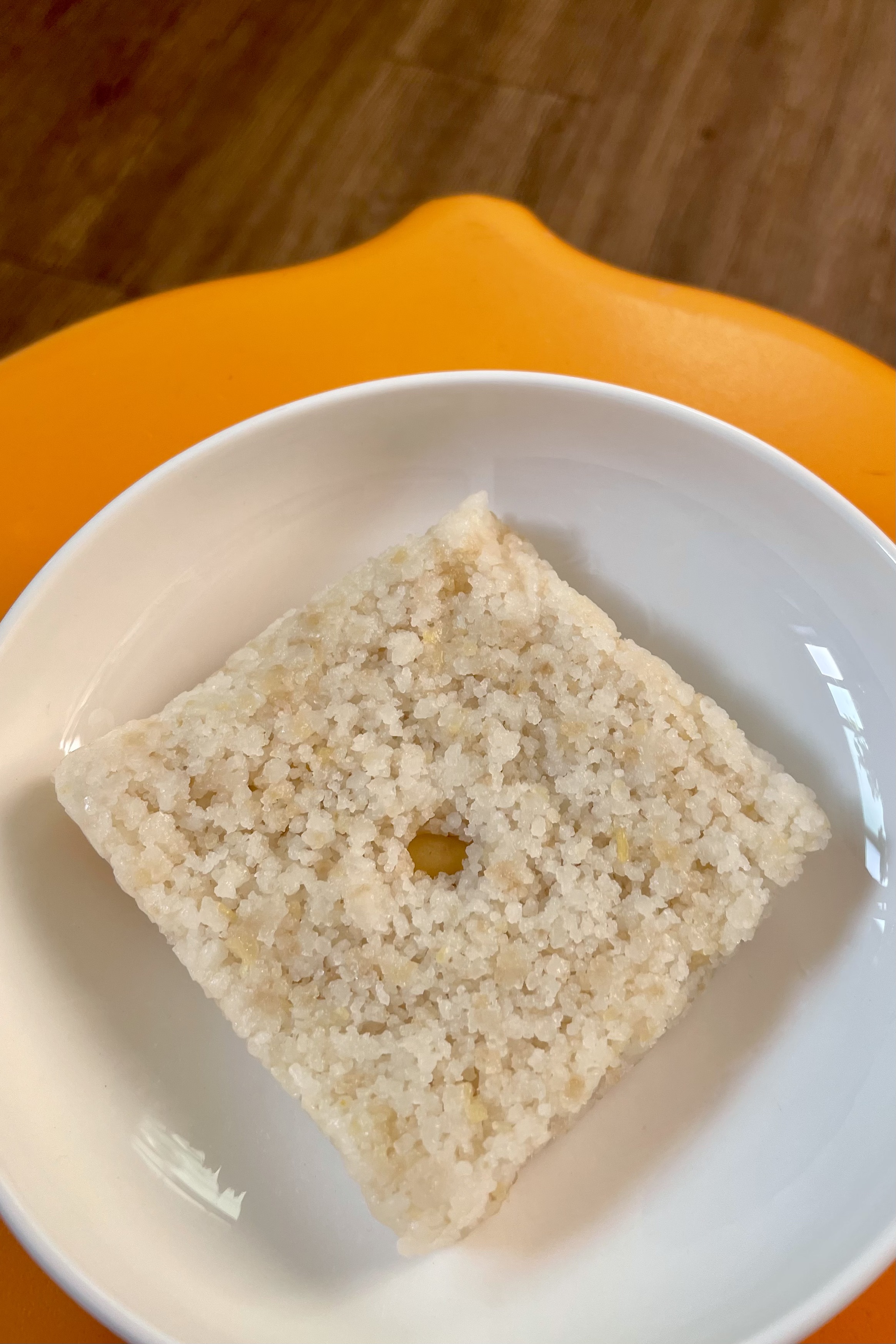
 

Plump and plushy duteoptteok is a dumpling about the size of sleeping hamster, made from sticky rice, white beans, walnuts, pine nuts, chestnuts, jujube, honey, and citron—it’s a lot of textures and flavors in a cuddly little package! Jatseolgi is a comparatively stripped-down square of just white rice and pine nuts; the texture is both sticky and cake-like, with the clean sweetness of the rice allowing the scent and flavor of the pine nuts to shine. 

Biwon Tteokjip
33-1 Bukchon-ro
Jongno-ku
Seoul

Sunday, May 28, 2023

Danpatjuk and Sipjeondaebotang


Danpatjuk and Sipjeondaebotang
The Second Best in Seoul

If you arrive in Seoul feeling cruddy, there’s a silver lining: many must-try Korean delicacies emerged from food-as-medicine traditions. After 15 hours on the plane and 30 feverish hours in bed, I was happy to spend a couple of hours slowly making my way across town to a little cafe called The Second Best in Seoul. 

Founded in 1976, the shop’s original stock-in-trade was the medicinal tea sipjeondaebotang (one website offers the poetic translation, "wholly and dearly protect and preserve everything”), a murky brew of 10 different roots and herbs including peony, milkvetch, angelica, lovage, cinnamon, and licorice. It looked like a mud puddle, tasted slightly abusive, and made me feel noticeably perkier. 

Having taken my medicine, I enjoyed my reward: a helping of danpatjuk, the hearty sweet porridge for which the shop is currently famous. Rather than letting all the ingredients stew together, Second Best assembles each bowl to order; this allows customers to savor the range of flavors and textures contributed by the silky red bean soup, meaty whole red beans, gummy ginkgo nuts, bready chestnuts, and gooey rice cake. 

From the unassuming name to the vintage decor, everything about The Second Best in Seoul is humble, straightforward, and welcoming. The menu also includes ginger and jujube tea, cinnamon punch, and a fermented rice drink. 


The Second Best in Seoul
서울서 둘째로 잘하는 집
122-1 Samcheong-ro
Jongno-gu, Seoul
South Korea

Friday, January 10, 2014

Jat Juk


Jat Juk

With every graphite-colored day that drags by I find myself grasping for new winter survival strategies.  Currently, I'm leaning on homemade pudding and awkward song parodies. 

This recipe for Korean jat juk, an intensely comforting pinenut-rice-date porridge, comes from Mark Reinfeld and Jennifer Murray's excellent "The 30 Minute Vegan's Taste of the East."  I added only this optional theme song, sung to the tune of Lovin' Spoonful's "Summer in the City":

"Hot pudding!  Winter in the city!  Back of my spoon feelin' really cinnamon-y!"

Jat Juk

1/2c lightly toasted pine nuts 
1 1/2c water 
pinch of salt 
1/4 c brown rice flour 
3T agave or other sweetener 
4 finely chopped dates 
pinch of cinnamon 

Blend the nuts and 1c of water in a blender or processor until smooth; pour into saucepan and place over medium heat.  

Meanwhile, use a frying pan to dry fry the rice flour over medium-high heat for 3 minutes, stirring frequently; slowly add 1/2c of water, whisking for a smooth paste.  

Add the pine nut mix and salt to the rice mix; cook until it thickens, about 5 minutes, whisking well, then stir in the sweetener. 

Pour into serving bowls and top with chopped dates and a sprinkle of cinnamon.

"Hot pudding!"

Saturday, June 8, 2013

Hotteok and Bungeoppang


Hotteok and Bungeoppang
"Ho Duck" stall, $1 each

Look to the left as you enter the Boo Han Korean Market in Edmonds and you'll get one of the best deals in town on dinner and a show--assuming you can justify having waffles or pancakes for dinner. 

While you wait and watch, the cook in the "Ho Duck" stall crafts two of Korea's best-loved street-style sweets.  The eponymous hotteok (above) are crusty, golden pancakes of yeasted wheat and rice flours, filled with caramelized sugar and nuts.  It's a simple enough operation but made mesmerizing by the cook's practiced moves and enviable patience.  

The hotteok start out as a ball of sticky, bubbly dough.  The cook kneads it a little, then fills a dent in the center with a a mixture of brown sugar and crushed nuts.  He pinches the dough closed to seal in the filling, then uses a special metal tool to flatten the ball on a well-oiled griddle.  


Once the hotteok are underway, it's time to get going on the bungeoppang.  "Fish bread" is really more of a fish-shaped waffle, cooked a whole school at a time in fancy high-volume griddle.  To get exactly the right amount of batter, the cook spoons a little into each fish-shaped void, then tops it up with a seam applied with a squeeze bottle. 

On top of each batter cloud goes a dollop of sweetened red bean paste.   

Then the lid is closed up to seal the waffle around the filling.  As soon as the cook deems them ready, he uses a small metal hook to flicks them out of the iron and into a waiting box; it's not at all unusual to order six or a dozen at a time.  

Boo Han Korean Market 

22618 Hwy 99
Edmonds, WA
425/778-7400


Friday, June 24, 2011

Shikhye


Shikye
Yakult

Shikye is a sweet Korean beverage made from cooked rice that is quickly fermented with malt water, then sweetened and flavored with ginger. This commercial version made by Yakult (tagline: "Nostalgia drink since 1993") is as sweet as syrup but oddly watery and clouded by bloated rice particles. It tastes almost like it would be a hit with hummingbirds.

Wednesday, April 27, 2011

Yeot


Yeot
Paris Baguette

This new addition to the category of sweets I've dubbed "performance confectionery" comes courtesy of my former colleague Candace, now a teacher (and Sweet Travel corespondent) in South Korea.

Inside a primly-wrapped package from Paris Baguette (a popular chain of bakeries found throughout Korea) were 16 nuggets of yeot, a quintessentially Korean sweet. This stiff grain-based taffy can be made from rice, wheat, sorghum, or corn, to which may be added various nuts, seeds, legumes, fruits, and spices. My best guess as to the flavors pictured above (top to bottom): molasses with pine nuts and sesame seeds, toasted soybean flour, peanuts, and ginger.

Yeot is such a complex tradition that specific words differentiate different consistencies and ingredients, including the famed regional variations of various provinces (eg maize or radish). The harder versions are eaten as candy, while softer yeot mixed with therapeutic herbs offers relief from colds and sore throats.

While Paris Baguette is a high-end treat boutique, yeot is more commonly sold by street vendors working from small stalls or carts. In order to attract attention and customers, these vendors take advantage of yeot's Silly Putty-esque properties; although chewy, yeot will shatter like safety glass if hit correctly. Many YouTube videos show vendors cutting a slab of fresh yeot into bite-size pieces by striking a chisel with a huge pair of rattling metal scissors, keeping up a syncopated racket as cut candy shoots into a growing pile. It's a mesmerizing performance, but leaves me wondering if yeot is also a cure for headaches.

Hankering for more? Check out other travel-related food posts at Wanderfood Wednesday.

Wednesday, January 20, 2010

Kyung-dan


Kyung-dan
Uwajima, $3.19/15

Teeth still on edge after several disappointing purchases of grocery store sweets (eg
choco coffee mochi, banh xu xe), when I spotted the Uwajimaya superstore's display of Korean cakes, I almost kept walking. Something snagged my attention though--the colors? the textures? a whiff of cinnamon escaping the plastic-styrofoam trays?--and I lingered long enough to realize that these rice cakes were fresh and tender, not the thawed blobs I was expecting.

I chose a pack of small round
kyung-dan (also spelled gyung-dan), dumplings made of boiled rice flour dough (much like Japanese shiratama dango). They were filled with an impeccably smooth red bean paste and rolled in five different but equally delicious toppings: confectioner's sugar, black sesame, two kinds of bean powder, and cinnamon.

Kyung-dan are among the many Korean confections manufactured at Han Yang Oriental Food in Lakewood, Washington (yep,
that Lakewood) and sold in Asian markets around the Pacific Northwest. Judging from this cooking lesson, they're also reasonably easy to make at home.

Han Yang Oriental Food Mfg
3819 94th St.
Lake Wood, WA 98400

Friday, April 10, 2009

Royal Bakery


Green Tea Cake (top)
Green bean bread (bottom)
Royal Bakery

Although the front window features a wizened monstrosity that might just be Miss Havisham's wedding cake, the rest of Royal Bakery's glass cases are filled with fresh and attractive Korean-style breads, tarts, and cakes.  The green tea cake is a delicate sandwich of sponge and whipped-cream frosting with a mild but appreciable bitterness--ideal (green) tea party fare.  For breakfast treats, there's a range of soft, yeasty buns buns filled with velvety jam made from beans of every available hue.

The Royal Bakery
15210 Aurora
Shoreline, WA 98133
206/362-5188