skip to main |
skip to sidebar

Ube Halaya
Valerio's Tropical Bakeshop, $6.50
When you've grown up associating bright colors with bland sweetness (think cupcake sprinkles or grocery store frosting) the riotous colors at Valerio's Tropical Bakeshop are unexpectedly flavorful. The golden yellow that makes rolls and pies shine like small suns comes from shreds of cheese, pats of butter, or salted egg yolks. Shades of green are contributed by leaves including bamboo (used as wrappers) and pandanus (most often used as an extract), both of which impart an exotic aroma. The root vegetable ube is an intense shade of purple that makes ube-based treats like ube halaya pudding ($6.50) a visible and indispensable feature of special occasion buffets.
Putsinta ($1.99/4) are Valerio's mash-up of two Filipino favorites: soft, fluffy puto rice-flour rolls and and chewy kutchinta rice cakes. Here the purple marbling comes from festive food coloring, rather than actual ube.

Maruya ($1.25) are fritters of ripe mashed banana, fried until golden and dusted with sugar.
The addition of lye water gives the sticky rice in suman sa lihia cakes ($1.50) a creamy color and extra-chewy texture; enfolding the rice in bamboo leaves before steaming adds aroma and a tidy, environmentally-friendly wrapper that makes suman a cinch for picnics (like the cemetery-side meals enjoyed during the Undas holiday).
Valerio's rainbow-colored offerings also include pan de sal, biko, ensaymada, buko pie, egg pie, cassava cake, and sapin-sapin.
Valerio's Tropical Bakeshop
1368 Southcenter Mall Ste 150
Tukwila WA
206/246-6166
Polvorones
Aling Conching at Seafood City, $1.99/10
Based on a Spanish cookie named for its dusty texture, these Filipino polvorones are bite-sized blocks of compressed flour, milk powder, sugar, and butter, given a faintly tropical flavor with the addition of buko (young coconut) and pandan (screwpine) extracts.
Nata de Coco
Chakoh, $1.68/jar
In the Philippines, around a third of the population makes a living from coconut-related activities and products. Known affectionately as the "tree of life", the coconut palm yields an astonishing range of goods, from buttons and building materials to a store's-worth of edibles including coconut flesh, cream, milk, jam, curd, sugar, flour, and oil.
One of the simplest coconut products is the basis for one of the most complicated. To make coconut water all you do is poke a hole or two through the hull and pour out the refreshing drink sloshing around inside. To make nata de coco, you combine that water with a specific bacteria, acetobacter xylinium, and let it ferment. The bacterial colony produces a thick, squishy mat of coconut-flavored cellulose. Cleaned, sweetened, and cut into pieces, that gel is a high-fiber, low-fat delicacy enjoyed in drinks, pudding, fruit salad, or shaved ice desserts.
Although nata de coco is Spanish for "coconut cream", these cubes have a uniquely rubbery texture. Nata de coco is chewier than agar, less sticky than tapioca, and much tastier than an eraser.
Lengua de Gato
Sweet Coconut Bakery, $5.75/12
I went to the Urban Craft Uprising summer show to check out some jewelry...and left with cookies. I have my priorities.
Seattle's Sweet Coconut Bakery is a young company on a misson: "to create sweet treats that might induce you to sit down, maybe
put your feet up, and enjoy a cup of coffee, cocoa, or tea. Let time
tick slowly, as you would if you were on vacation on a tropical island,
where coconuts abound, and life is sweet."
Sweet Coconut's treats are largely Filipino, American, or some combination of the two. Crisp, rich little cookies that resemble cats' tongues in both shape and texture, lengua de gato are a Spanish recipe beloved in the Philippines and here given a Seattle spin with the addition of cacao
nibs from Theo Chocolate. Sweet Coconut's menu includes other well-traveled favorites such as polvorones (shortbread), pastillas de leche (cooked milk candy), sampanguita (coconut-butter cookies), macaroons, marshmallows, brownies, and peanut butter cookies.
Available around Seattle at selected farmer's markets--and the occasional craft fair--these treats can also be Sweet Coconut treats can also be ordered from Sweet Coconut's Etsy shop.
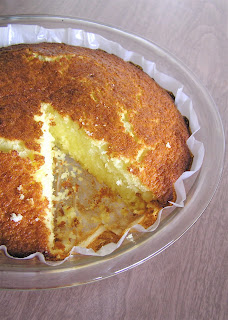
BibingkaD'Unik Oriental Food, $2.39 for 2 sachets of mixWhile I'm on the subject of pre-fab Filipino delicacies, allow me to present bibingka, a golden cake essential at Christmas but popular year-round. Innumerable variations are enjoyed throughout the Philippines and neighboring countries. Even having read more than a dozen different recipes, I can't say for certain what definitively separates bibingka from any old cake. I bought a box of bibingka mix from the Filipino grocery because I couldn't figure out what to do with the coconut jam or jars of chickpeas in syrup and was feeling inadequate; "Baking," I reassured myself, "I can do that!"My confidence made it as far as the register, where the cashier looked me up and down and speculated that I probably didn't have any fresh banana leaves. Banana leaves? Uh, nope, none of those in the pantry. "Oh well, I guess you'll figure something out."So I lined my pan with wax paper (the banana leaves of the Pacific Northwest) and set to mixing. The mix itself is made up of rice and wheat flours, sugar, and baking powder; to that I added water, eggs, sugar, and melted butter (although the box called for margarine, which I consider to be the Devil's own spread). Then I had to choose my cooking method from a fascinating range of options. The preferred method is cooking the batter in 4 small batches in a toaster oven; instructions are also given for cooking in a ice cream can (apparently Filipino ice cream comes in huge tins) over live charcoal, cooking on the stove in a skillet or "mini kawali", and last but not least, boring old oven baking (my choice). About 20 minutes later I was slicing into a hot, plump, golden-skinned bibingka. It was perfectly pleasant but a little ho-hum, like a moist yellow cake with the richness dialed down a notch and the texture set to "slightly rubbery". I definitely wish that I had sprung for some or all of the popular toppings--sugar, salted duck eggs, white cheese, melted butter, and grated coconut. To see bibingka done right, check out the [eatingclub]Vancouver blog.
D'Unik Oriental Food
18002 15th Ave NE
Shoreline, WA 98155
206/361-9474

 ChamporadoRanch 99 Asian Superstore, $1.50/single-serving packA common snack or breakfast food in the Philippines, champorado is a soft, sweet cereal of overcooked sticky rice, chocolate, and sugar. Although I'd probably pass on the traditional accompaniment of dried fish, there's little not to like about the idea of "cocoa flavored rice porridge". I always imagined it would fall somewhere between chocolate rice pudding and the delicious dregs of all-to-infrequent childhood bowls of Cocoa Pebbles. So I snagged a packet of Family Recipes' heat'n'eat champorado from the Asian Superstore up the road and spent the next few weeks using it for entertainment whilst in the kitchen waiting for other things to happen; I passed several happy hours gently squeezing the pouch as if building up my hand muscles or mulling over a cheap breast implant, tunefully imploring Champorado to "come to your senses". Finally hunger brought me to my own senses. If you're out on maneuvers, it's perfectly possible to eat this S.R.E cold and "straight from the pouch"; for a more Martha approach, immerse the pack in boiling water (below) or nuke it in the microwave. Champorado can be dressed up even further with a swirl of condensed milk.Although Family Recipes promises that when you tear into their packet, "...you are assured of the perfect champorado," I sincerely hope that they are exaggerating. Their champorado might best be described as "primordial", both in terms of its slimy texture and the impression it gives of wanting to be something else without quite making it. It may be that champorado, like fellow regional comfort foods ochazuke and grits, really needs to be slaved over a little. And I do mean "a little"; from the looks of this recipe, making champorado from scratch isn't that much more demanding than heating and decanting a pre-fab packet.


