Showing posts with label New Orleans. Show all posts

Sunday, February 19, 2012

Cafe du Monde


Beignets

Cafe du Monde, $2.10/3

Cafe du Monde's original location in New Orleans' French Market sells fresh beignets 24 hours a day. Whether you need something to balance out your morning oatmeal, or--more likely--could use a sobering bedtime snack, Cafe du Monde will supply you with as many deep-fried dough pillows as you require. During the day, the cafe is teeming and boisterous to an almost Disney-esque degree. In the small hours it has the unflattering starkness of an Edward Hopper painting, only with a few more people and a lot more powdered sugar.

Saturday, February 18, 2012

Sno-ball II


Sno-balls
Left: Mother Nature's Cupboard, $3
Right: Tee-Eva's, $2

Absolutely the only fault I can find with visiting New Orleans in February is the lack of sno-balls. This Louisianan delicacy of finely shaved ice topped with flavored syrup and condensed milk is a summertime staple but in the off-season most sno-ball stands are shut up tight. Most.

After spending much of my 2011 visit on a frustrated hunt for this frozen treat, I decided to dedicate 2012 to tracking down easier prey. And as will happen, the path of least resistance delivered me to not one but two sno-ball shops.

The first was Tee Eva's Famous Old-Fashioned Pralines and Pies, in the Garden District.

Eva Louis Perry grew up in rural Louisiana and learned to cook by hanging around the kitchen watching her mother, aunts, and grandmothers. Family recipes became the basis of her business when Eva moved to LA and made her name as a caterer specializing in Southern food. After a decade on the West Coast, Eva returned to New Orleans in the late 1980s and became well known for pies and pralines, which she sold from a basket, walking down the street or through office buildings (even City Hall!); once some cops pulled her over, lights flashing, just to see if she had any pies left.

Even after opening her own shop in 1989, Eva continued to hit the streets with her basket, seeing herself as part of a "proud tradition" of women entrepreneurs of color, generations of whom walked around New Orleans with their pralines, pies, and calas. Eva even won a few parts in locally-filmed shows and films by setting up shop outside casting calls.

About ten years ago Eva retired; in a video from the Southern Foodways Alliance, she discusses the business and her legacy. She handed the business and the archive of family recipes over to her granddaughter, who still runs Tee-Eva's today. Specialties include pralines, mini pralines, sweet potato pie, pecan pie, sweet potato pecan pie, and cream cheese pecan pie; hand pies are $2 and larger pies made to order.

I wasn't aware of any of this backstory when I walked by. What drew me in was the eye-catching sign announcing "snowballs year-round!!". Perusing the list of flavors, I was attracted to "cake batter"; I asked the woman behind the counter what it tastes like.

"Like cake batter," she replied.

Sold.

She switched on her ice machine and shaved off a serving of fine, dry snow, then poured on the syrup. As she passed me the cup I was momentarily distressed by memories of "yellow snow" jokes, but then the reassuring perfume washed over me: vanilla, butter, and--power of suggestion?--something creamy and rich and deliciously dangerous, like raw egg yolks.

Tee-Eva's World Famous Pies and Pralines
5201 Magazine St
New Orleans, LA
504/899-8350


My second sno-ball came from the same stall where I finally tracked one down last year, Mother Nature's Cupboard in the French Market. In this video, proprietor Gene lets us in on all the secrets of a genuine New Orleans sno-ball, from layering the cup, to testing for quality, to what's really in "Tiger's Blood" syrup:


Mother Nature's Cupboard
1008 N Peters St
French Market Farmer's Market
New Orleans, LA

Friday, February 17, 2012

Antoine's


Meringue Glace
Bread Pudding
Antoine's, included with $20.12 lunch

Early in the 19th century, Chef Antoine Alciatore was already making a name for himself in his native France when he felt the pull of the New World and its seemingly limitless possibilities. New York was a crude disappointment so he struck out again for New Orleans; the booming cotton town proved a welcoming home for his extravagant tastes and French traditions. In 1840, the 27-year-old established Antoine's, which quickly became one of the city's best-reputed restaurants. In 1874, Antoine left the restaurant in the capable hands of his wife and children (including son Jules, inventor of Oysters Rockefeller) and returned to France in 1874 to die. His namesake restaurant went on to become the United States' oldest family run restaurant.

What with its white tablecloths and attentive service, Antoine's is not the kind of place I normally have the opportunity to visit, but a generous lunch special puts it within the realm of possibility: an appetizer, entree, and dessert for $20.12, along with martinis for $0.25 each. Dessert choices included a classic cheesecake with berry sauce, a nut-studded bread pudding smothered in caramel sauce, and "meringue glace", a crisp meringue nest topped with ice cream, toasted almonds, and fudge sauce.

In between tucking in your chair and setting fire to Baked Alaska, Antoine's servers are more that than happy to answer questions about the business or the maze-like building, the restaurant's home since 1868. At lunch, most diners eat in the "Large Annex", a dim cavern wallpapered in the autographed photos of Antoine's hundreds of illustrious visitors; it's perfectly acceptable to browse and gawk as long as you don't get in anyone's way.

Harrah's Casino Desserts


Creme Caramel (top)
Chocolate Cream Pie (bottom)
Harrah's Casino, $13 buffet

There's one sure bet at Harrah's Casino: if you ante up for the buffet, you won't want to eat again until spring.

From its clashing carpets to its flashing lights, the casino itself is meticulously designed to keep even the calmest eye from settling anywhere for long, giving every visitor decorator-induced ADHD. The buffet plays along, with more than a dozen stations offering everything you might hunger for, until your plate is piled so high you can't remember what's underneath and eating becomes an archaeological excavation of your basest impulses.

After grits, mashed potatoes, mac 'n' cheese, and well over a pound of steamed asparagus I wandered over to see how much trouble I could get into at the wraparound dessert counter: plenty. Not the best creme caramel or chocolate cream pie I've ever had, sure, but the best I've had from a buffet, and they did a great job of padding out the rough edges left by my previous courses.

Thursday, February 16, 2012

Scadalini


Scadalini
Angelo Brocato's, $.40/ea

Continuing my tour of Sicily by way of New Orleans, I present the scadalina, or "dead man's bones" cookie.

Angelo Brocato opened his first gelateria in New Orleans' French Quarter in 1905, using techniques and recipes learned during his apprenticeship in Sicily. In the 1970s, the shop moved out to its current location on Carrollton Avenue--appropriately enough, an easy walk from streetcars running on the "Cemeteries" line.

Inside the cheerful parlor, chilled cases display a huge selection of Italian and Sicilian delicacies: pastries and candy, gelato and ices, composed desserts such as cassata and torroncino. I could easily have whiled away hours sampling my way from left to right if not for the glass jar filled with somber scadalini, lurking on the counter like a mouth-watering momento mori. I ordered a cup of pistachio gelato and passionfruit ice, and a "bone cookie".

Texturally, scadalini are more terracotta than pastry: that white cylinder is crisp and nearly hollow, the clove-infused cookie dense and chewy, underpinned by a glassy skin of caramelized sugar. I believe that these cookies are an example of pasta forte, a type of pastry dough developed in Sicily and better suited to the island's climate than are doughs reliant on eggs, butter, or yeast.

Pasta forte is made from just sugar, flour, and just a touch of water; typically, ground cloves are the only other flavoring that might be added. The stiff mass is kneaded well, then formed (with their religious significance, bone shapes are common)and left to air dry for a few days. Just before baking, the cookies are sprayed with water; the heat of the oven dries out the dough and causes the bottoms to glaze over.

Angelo Brocato's Italian Ice Cream Parlor
214 N Carrollton Ave
New Orleans, LA
504/486-1465

Wednesday, February 15, 2012

The Cake Cafe


Cupcake
The Cake Cafe, $1 with meal purchase

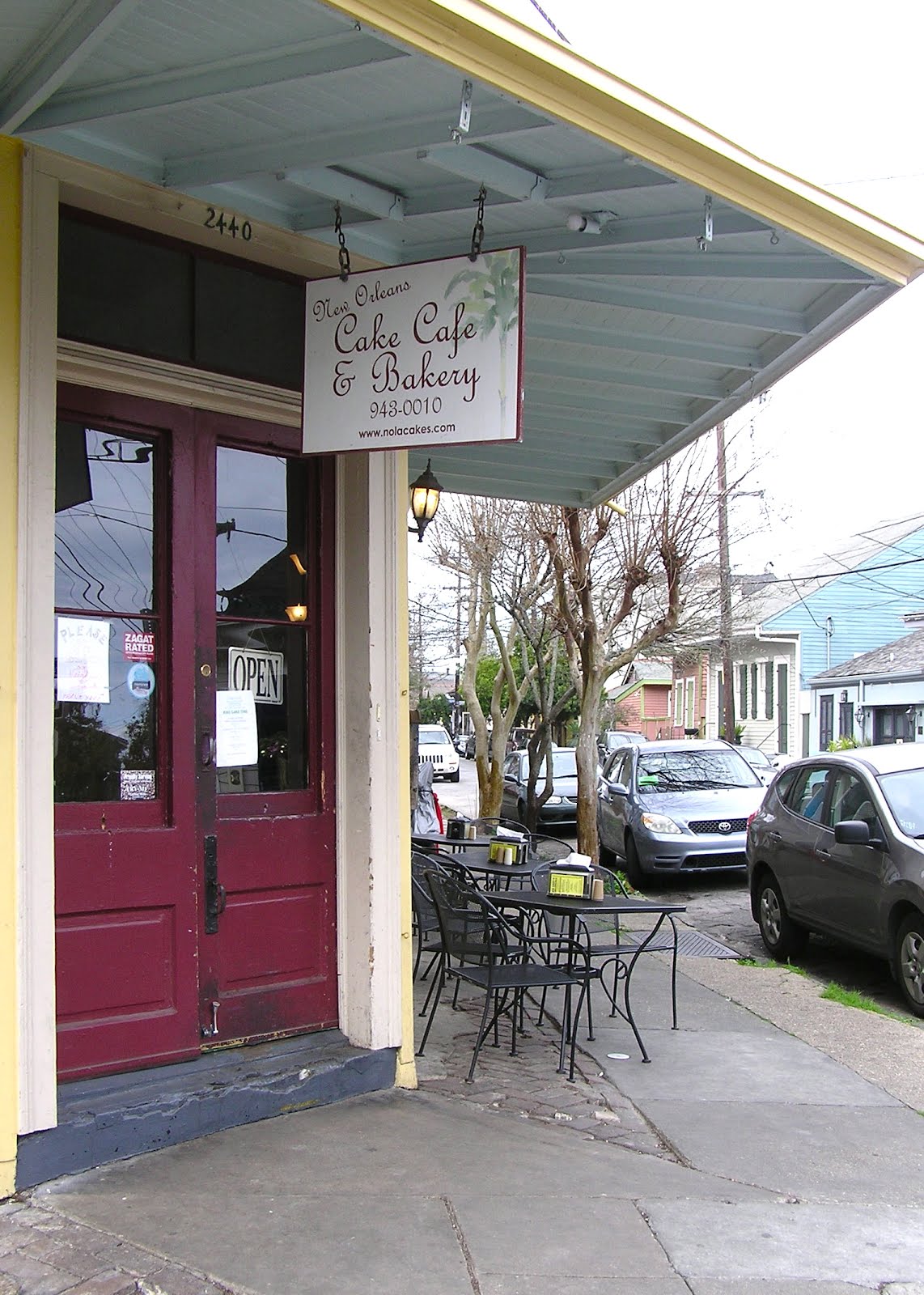
It was an offer I couldn't refuse. After I ordered my meal at the New Orleans Cake Cafe & Bakery, the woman behind the counter asked if I wanted a cupcake with that. For only a dollar more I could take my pick from a broad glass case filled with fat, frosted cakes.

The only catch? I was ordering breakfast. For a few seconds I held a silent debate.

The outcome? I can now say that cake goes just fine with grits.

Cake Cafe founder Steve Himelfarb first came to New Orleans to work as recording engineer, but eventually realized he was happier baking. He started out selling sliced of his homemade chocolate cake door-to-door, then to order, then from a small storefront in Exchange Alley. Just about a year after the bakery opened, Katrina hit. Himelfarb spent some time managing a restaurant in New York, but was back in New Orleans as soon as he had the chance, re-opening the bakery in a larger space in the Faubourg Marigny. The cafe is now the kind of neighborly place where people share tables when the free coffee refills and $1 cupcakes result in full-capacity crowds.

After making up my mind to have a cupcake, I was faced with an even more difficult choice: chocolate, red velvet, or wedding? I went with the "wedding" cupcake, a chubby puck of soft white cake crowned with a rich buttercream frosting saturated with swoon-inducing almond extract.

The New Orleans Cake Cafe & Bakery
2440 Chartres St
New Orleans, LA
504/943-0010

Tuesday, February 14, 2012

Velvet Artisinal Teacakes


Teacakes
Velvet, $1 each

Velvet dispenses serious coffee and frivolous baked goods from a diminutive corner shop in New Orleans' ritzy Audobon neighborhood. The coffees are carefully curated and include Stumptown, Ritual, and Verve, made using your pick of methods; there's an espresso bar with the usual range of options, and three "slow bar" choices: a Chemex, a syphon, and a pour-over system.

The tiny kitchen also bakes and cranks out light meals. Featured treats included homemade pop-tarts and "artisanal teacakes"--a.k.a. bite-sized cupcakes. The vast selection caused me to panic a little and pick a couple of cakes that seemed reassuringly familiar: a "Sour Puss" (lemon cake stuffed with homemade blackberry jam with blueberry on top) and a "Coconut" (chocolate cake with buttercream coconut top). Only later, when read the full menu on Velvet's website, did I have a little twinge of buyer's remorse--and hunger. I could have had:

Mast Brothers Syphon: syphoned hand sorted Stumptown coffee w/Mast Brothers bar cake stuffed center as well as Madagascar chocolate frosting

NOLA: yellow cake-praline stuffed-praline frosting

WHO DAT: saffron rice filled cake with Creole frosting

Blood Orange: orange cake with a slice of blood orange stuff inside with orange frosting

Blue Flower: Mem Imports Earl Grey tea cake, blue flower frosting

Velvet Espresso Bar and Artisanal Teacakes

Monday, February 13, 2012

Soda Fountain


Soda Fountain
New Orleans Pharmacy Museum, admission $5

Housed in what was once the premises of the country's first licensed pharmacist, the New Orleans Pharmacy Museum offers a rollicking look at the health care endured by our ancestors, featuring: leeches, bone saws, chocolate-covered poison pills, drug-laced tampons, and reusable syringes the size of a small jackhammer.

In a cheerier corner near the front there's a soda fountain dating from 1855. Made from black, white and pink marble, it's an appropriately grand monument to the pharmacist's skill at making the medicine go down. Back in the days when most medication was administered as shots of off-puttingly bitter liquid, pharmacists discovered that flavored syrups could be beneficial, whether added directly to the medicine or mixed with fizzy water and served as a palate cleanser.

Customers grew so fond of the sweet drinks that soda fountains flourished and became a standard feature of pharmacies for more than a century. Many early soft drinks contained narcotic ingredients, and many of today's most popular drinks are based on those original recipes. It's a new take on Hippocrates: "Let soft drinks be thy medicine and medicine thy soft drink.

Sadly, you won't get a soda at the Pharmacy Museum--or if you did, it would be far from a health tonic. Their ornate soda fountain still functions, but all of the pipes and spigots are made from lead.

Sunday, February 12, 2012

Hurricane


Hurricane
Pat O'Brien's, $8

After you've spent the afternoon screaming encouragement at a stream of dressed-up dogs roaming the streets during the Mystic Krewe of Barkus--Mardi Gras' only canine-friendly parade (see below)--it makes a certain kind of sense to recuperate in a smoky bar screaming Elton John songs over foot-tall glasses of rum dressed up as fruit juice.

Pat O'Brien's is a legendary and labyrinthine bar complex with lounges, a courtyard, a cavernous dueling piano bar, and a house drink, the Hurricane, whose original purpose was to maximize rum consumption. The bar's founder came up with the recipe during World War II when cheap booze ran freely but top shelf liquors were scarce; crafty salesmen required bars to buy dozens of cases of rum per every one case of whiskey. At O'Brien's the surplus rum was sweetened and served over ice in a glass the size and shape of a hurricane lamp.

Today you can take your Hurricane glass home as a souvenir--which seems like kind of a cruel thing to suggest to a drunk person.


Saturday, February 11, 2012

Fig Cookies


Fig Cookies,
Portera's Panetteria, $4/bag

Sure, the renovated Market in the heart of New Orleans' French Quarter is a genericized tourist trap: where else can you find feathered masks, taxidermy ashtrays, blingy sunglasses, and marked-up cans of chicory coffee?

In at least twenty other souvenir shops within a four-block radius.

But in other ways the French Market still has its own unique texture, accumulated over the two centuries that trading has taken place on the site. For a glimpse into that past, turn your back on the sparkliest stalls and head for the tables reserved for a rotating cast of small-scale vendors and craftspeople.

Maybe you'll run into Cynthia Portera, smiling from behind two card tables piled high with colorful cookies and sweets. Pastries from Portera's Panetteria are a delicious reminder of the Sicilian migrants who once made up almost half of the French Quarter's population, many of whom made their livings more or less this way, selling fruit or sweets from carts, stalls, or small shops.

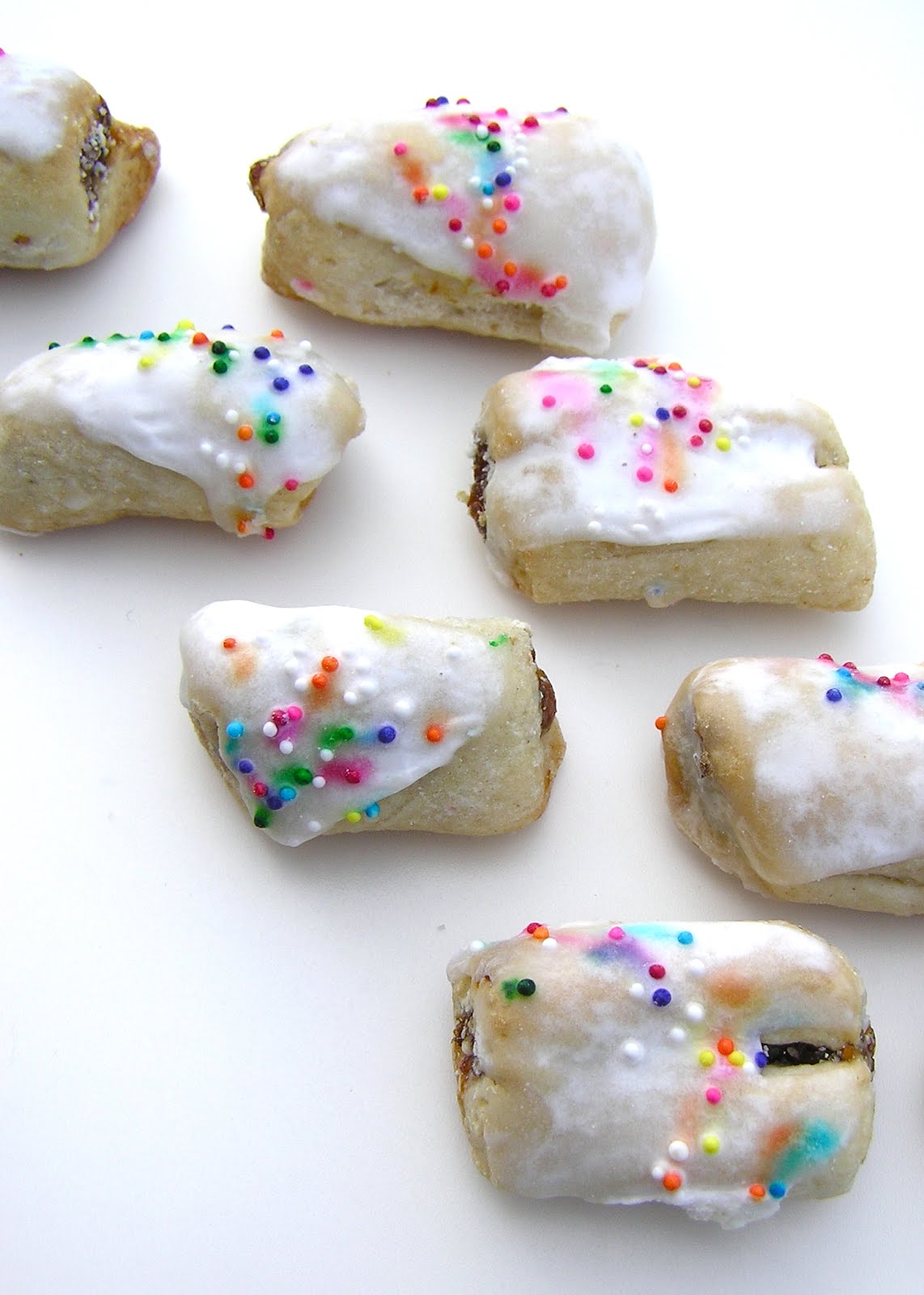
Portera's products are based on Sicilian traditions; ingredients and flavors that signal the island's rich heritage of Mediterranean and North African influence. Cookies include potent little nuggets scented with anise or lemon, and cucidate stuffed with fig jam and topped with sugar sprinkles (above). For special occasions there are bouquets of candied almond "flowers" (the five petals invite health, wealth, long life, fertility, and happiness) and, in season, bags of the shaped pastries offered on a St. Joseph's Day altar (including a sandal, wreath, cross, crown, and loaf).

Portera's Panetteria
12652 River Rd.
Destrehan, LA 70047
985/764-0291


Saturday, March 19, 2011

St. Joseph's Day


St. Joseph's Day


In many Italian communities, elaborate three-tiered altars are a key feature of St Joseph's Day celebrations. The altars are said to have originated in Sicily when a famine was cut short after prayers to St. Joseph resulted in a life-saving crop of fava beans.

St. Joseph's altars are piled high with a variety of foods including fruit, vegetables, Lent-appropriate fish, and dried favas. Because Joseph is the patron saint of pastry chefs, baked goods feature prominently: breads shaped like crosses or carpenters' tools (even the crumbs of which are considered to have the power to avert certain disasters), pastries resembling sacrificial lambs, fish, pinecones, or the Mater Dolorosa's sword-skewered heart. In some regions, St. Joseph's celebrants also enjoy zeppole, balls of fried dough topped with buttercream rosettes.

The photo above shows a St. Joseph's altar on display at the Southern Food and Beverage Museum in New Orleans, where the tradition arrived with Sicilian immigrants at the end of the 19th century:

"By 1910, forty percent of the population and 90% of the French Quarter was Italian, primarily Sicilian. At that time there were so many altars given in homes and churches that was impossible for one person to visit them all, even in one's own neighborhood. Instead another tradition developed: one could visit nine altars and at the ninth, one would make a wish and it would be granted. It is this thread of petition that runs through the tradition of the altar.

"Some altars are created out of a custom called questua, which means "searching" or "seeking". Instead of buying the ingredients and materials for the altar, one begs for them, further humbling oneself in an act of posverty. This recalls the impoverishment of the starving Sicilians who intially asked for St. Joseph's help. It also reminds the person on the questua of the purpose of the altar: to feed the hungry."

After the foods on the St. Joseph's altar have served their ceremonial purpose, they are distributed to the needy.

Tuesday, February 22, 2011

Sugar and New Orleans


Sugar and New Orleans: Some Notes

Shortly after arriving in New Orleans, I stopped by the visitors' center just off Jackson Square. Although I already had a sweets-centric itinerary drawn up, I wanted to be sure I wasn't leaving out anything important (or delicious). I approached the perfectly coiffed matron at the information counter, explained my interests, and asked if there was anything I should be sure to try.

After a few seconds' thought, she shook her head and delivered the bad news: "In New Orleans, we don't particularly care for sweets."

Although I would never say "hogwash" to a well-meaning volunteer, I was certainly thinking it. In rebuttal, I offer my previous week's worth of posts plus the following collected notes that didn't quite fit into those posts. Taken together, they form a portrait of a city that is positively steeped in sugar. To quote a 19th century souvenir apron on display at the Cabildo Museum (in the very room where the Louisiana Purchase was signed):

"Cotton is King; Sugar is Queen; Rice, the Lady-in-Waiting."


By the late eighteenth century, Europe's appetite for sugar and rum was such that in the cane-growing colonies of Haiti and Santo Domingo, slaves outnumbered free citizens by eight to one. Even as depicted on these decorative French plates (above, right and left), cutting (with knives like the ones above, center) and processing cane was arduous and dangerous work. In 1789 the island of Santo Domingo exploded in a series of violent slave uprisings. The aftermath shifted attention to Louisiana, where the humid climate was well suited to sugarcane. Refugees from Santo Domingo included many who would shape the region's nascent sugar industry, as well as others who would leave their mark, such as Antoine Peychaud, father of the cocktail.

One particularly suitable site was a lush stretch of land beside the Mississippi River that was inhabited by Houmas Indians and grazed by bison when French explorers arrived in 1682. The
Houmas House that still stands there today was built in the 1820's by Wade Hampton, then the state's chief sugar producer and the region's largest slave holder. In 1858 the plantation and columned mansion were bought by John Burnside, "The Sugar Prince of Louisiana" and owner of more than 300,000 acres. Full of art and fine furnishings, "The Sugar Palace" draws many tourists to Darrow, an hour's drive from New Orleans.

After the Civil War, many former slaves returned to the sugar fields as employees, but the situation proved unproductive and untenable. Plantation owners began to recruit foreign workers--from China, Northern Europe, and Italy--adding to the diversity of cultural influences still felt in New Orleans today. During the same period, the block of Decatur Street that now houses the Jean Lafitte National Historical Park was almost entirely made up of confectioners' kitchens and shops; the row of candy stores was a major attraction for visitors until the block burned down in 1937.


Louisiana was home to many of the milestone innovations that contributed to the modernization of the sugar industry. The enormous Audubon Park in the Garden District, for example, was formerly the site of large plantation where the first controlled granulation of sugar was achieved in 1794. The legacy of that discovery is alive and well in neighboring St. Bernard Parish, where Domino Sugar's sprawling Chalmette Refinery (above) produces 6.8 million pounds of sugar every day. The refinery is easily seen from the tour boats that travel up and down the river.

The Chalmette plant opened in 1909, replacing two obsolete refineries on Decatur Street in the French Quarter. It was such a major employer that the city built a streetcar line to deliver workers to the factory door. In the past century the Chalmette Refinery has withstood a number of challenges--WWI, the Great Depression, rationing during WWII. During Hurricane Katrina, nine feet of floodwater ruined the ground floor machines, but the refinery's sturdy buildings withstood the winds and became a refuge for stranded neighbors and a mustering station for the National Guard. The plant was renovated and running 98 days after the storm.


At Blaine Kern's Mardi Gras World, old parade floats are stored in a huge hangar until they can be harvested for re-purposeable parts. We were there in time to catch some still-intact floats from a sweets-themed parade a few years back : (above, from left) Mandarin Orange Cheesecake, Gooseberry Fool, Shoofly Pie. I flashed back to my elementary school glory years by calling out their names before the tourguide had even finished asking if anyone could identify them.

Even more sweet stories are featured the Southern Food and Beverage Museum's exhibition "
Tout de Sweet: All About Sugar" and Kit Wohl's cookbook, New Orleans Classic Desserts.

Friday, February 18, 2011

Meltdown Pops


Meltdown
Pops, $3/each

On our very last night in New Orleans, up popped a Groupon for a French Quarter sweet treat that I had totally overlooked: Meltdown, an artisan ice pop store just a block from the French Market.

Meltdown makes what might be called "popsicles" (were that word not trademarked by Unilever) but are more properly known as paletas. These frozen treats originated in Mexico and take their name from the wooden stick, or palo, which forms their handle. The hallmarks of a true paleta are fresh, natural ingredients, creative flavor combinations, and impeccable texture, whether icy or creamy.

Meltdown is one of the youngest members of a loosely affiliated extended family of paleterias. Their ancestral hometown is Tocumbo in central Mexico's Michoacán state, where confectioners have long used local produce to create delicious frozen pops. In 1941 Agustin Andrade left Tocumbo to launch Mexico City's first paleteria, La Michoacána. He was so successful that a Tocumbo relative soon arrived to start a second store. Many more paleta entrepreneurs followed, setting up shop wherever they could find sufficient demand; they trained their sons or apprentices, who in turn extended the paleta network. According to a recent story in Saveur magazine, there are now more than 15,000 paleterias in Mexico and the US.

Among those ranks is Las Paletas, a Nashville, Tennessee paleteria that was one of the first to be owned by women. Sisters Norma and Irma Paz grew up in Guadalajara and moved to the US as adults. Struck by the absence of their beloved paletas, they returned to Mexico to learn the ropes, then started Las Paletas. Along the way to becoming a high-profile success, the store helped expand Nashville's palate, revitalize a formerly grim neighborhood, and inspire a new generation of paleta makers.

Among these is Meltdown's Michelle Weaver. After being initiated into the art in Nashville, she spent several years selling her wares from a Good Humor truck in LA, before moving again to New Orleans. She initially sold at markets and from another truck, but demand allowed her to open a small storefront last year. It houses her production kitchen, a small retail counter, and a couple of coolers holding a cache of fresh pops.

On our last morning in town, I left my bags in the hotel coat check and headed to Meltdown first thing. The shop wasn't open yet so I had time to study the chalkboard list of the day's flavors:

strawberry hibiscus
pineapple cilantro
blood orange
lavender lemon
grapefruit poppyseed
salted caramel
Vietnamese coffee
saffron rosewater
chocolate lavender
black sesame seed

The saffron rosewater was a lovely pale peach color--like a faintly embarrassed vanilla--and threaded with a generous amount of the bright orange spice. I gulped it down while hustling back to the hotel for the airport taxi and found that the floral sweetness helped to temper my sadness over leaving New Orleans. I might even have tried to run back for a second pop, but I didn't want to risk having a paleta headache on the plane.

Meltdown
508 Dumaine
New Orleans, LA
504/301-0905


Meltdown on Urbanspoon


Thursday, February 17, 2011

Sno-balls


Sno-ball
Mother Nature's Cupboard, $3

Back when I was still a pre-schooler, Kentucky experienced a couple of really tough winters. I'm sure it was a terrible and challenging time for most adults, but I remember it fondly: I loved the rapier-long icicles hanging from the eaves, the sledding marathons, and especially a homemade treat that my mother called "snow cream." She and I would bundle up and venture out onto the porch to heap a mixing bowl high with all the fresh snow it would hold. Once back in the kitchen, we would stir it together with milk, sugar, and vanilla extract, then race to eat the sweet slush before it melted.

It turns out that my mother wasn't the first to think along these lines. Back in ancient times, people living in Sicily used to bring snow down from Mt. Etna, store it in caves and crevasses until summer arrived, then enjoy it drizzled with wine or flavored syrups. Later generations of Sicilians would master the arts of gelato, sorbet, and granita, and spread their specialties around the world--and one Sicilian-American would re-introduce us to the delights of eating snow.

In 1936, a New Orleans grocer of Sicilian descent named George J. Ortolano designed and built a machine that transformed blocks of ice into edible snow--and not rough, crunchy crystals, but soft, fluffy powder. With wife Josie cooking up creatively flavored creams and syrups, Ortolano began selling the refreshing concoctions at his grocery store. Word soon spread, and Ortolano was deluged with requests for the snow-making machine. His industrial model, the Snow-Wizard, spread across the South and became a staple of summertime snack stands.


I arrived in New Orleans hungry for a sno-ball and totally ignorant of how hard it would be to find one. I came prepared with the names of two popular stands, Hansen's Sno-Blitz and Plum Street Sno-balls, both of which have been around since the the 1940's. I called ahead to check hours and got endless ringing at one and a "closed for the season" recording at the other. Sno-ball season, it turns out, runs from March through October. February is not even on the calendar--however hot and sunny it may be. Nevertheless, I kept my hopes up and my eyes peeled; it seemed like I couldn't go three blocks without being taunted by shuttered sno-ball shacks and their tattered lists of unimaginably intriguing flavors: Orchid Cream, Nectar, Tiger's Blood, Teenage Mutant Ninja Turtle...

Just when I was starting to think I had a snowball's chance of finding an open sno-ball stand, I spotted Mother Nature's Cupboard in the French Quarter's French Market. Although Mother Nature's is primarily a farm stand, they augment their produce sales with tourist-friendly snacks and drinks, and the proprietor was more than happy to make me my first-ever sno-ball.

He took an enormous ice block from the freezer and placed it in the belly of the squat, blocky "Southern Snow" machine (a Snow-Wizard competitor), which started to chug when he flipped the switch. The shavings sprayed out a chute in the side, and to demonstrate what separates a sno-ball from a crushed ice "snow" cone, he tossed a handful into to the air, where the glittering snow cloud hung briefly before the flakes drifted to the ground: "You can say you saw it snowing in the French Market!" After filling the cup with snow, he packed it down and poured on a swig of my chosen syrup, almond-based "Wedding Cake" (below, right). He repeated the layering process until the cup would hold no more, ensuring the the last bite would be as soft and sweet as the first. A swirl of condensed milk was the finishing touch.

Not every treat I spend days searching for lives up to the anticipation, but the sno-ball was even better than I had hoped, even better that the snow cream of my memories.

Mother Nature's Cupboard
1008 N Peters St
French Market Farmer's Market
New Orleans, LA

Bananas Foster


Bananas Foster
Court of Two Sisters, $8

Like a rock star who relies on showmanship in lieu of youth, looks, great hair, or straight teeth, Bananas Foster is homely dessert that puts on one hell of a show. Its basic constituents are sliced bananas, vanilla ice cream, butter, sugar, cinnamon, and booze. What makes Bananas Foster extraordinary is that these ingredients typically come together at tableside and over an open flame: it's a performance dessert.

The dish originated in 1951 at famed New Orleans restaurant Brennan's, and was named for a local politician who was friends with the owner. I ordered it at the Court of Two Sisters, another venerable restaurant, named for sisters Emma and Bertha Camors, born 1858 and 1860, who ran a fashionable "notions" shop on the site. The restaurant's courtyard is the largest in the French Quarter, a romantic expanse dolled up with wisteria, fountains, and gas lamps. It's a great place for dinner at dusk, and a perfect stage for dessert course pyrotechnics.

Our affable server, Jay, set up a prop table with all the necessary accouterments, including a battered copper pan that looked like it might have belonged to Emma or Bertha; Jeff explained that all the waiters fight over that one because it works the best. He cooked the butter and sugar over a small brazier, then added the cinnamon and bananas. Finally, he checked that no one was walking nearby, told us to get our cameras ready, and added the rum to the hot pan: it instantly ignited into a tower of flame. Seconds later the bananas were spooned over the ice cream and dessert was served. I was digging into the warm, gooey mess before my eyes had even recovered from the rum flare.

Court of Two Sisters
613 Royal Street
New Orleans, LA 70130-2181
504/522-7261