Friday, August 31, 2012

Warabi Mochi


Warabi Mochi
Tokara, $4

Mochi is one of Japan's staple foods, a rice-based dough that can be eaten sweet or savory.  While most mochi is made from mochigome, a short-grained glutinous rice, other foods that share mochi's characteristic chewiness are sometimes also known as "mochi".  Warabi mochi gets its springy texture not from rice, but from the starch of bracken ferns.  Translucent and slightly slippery, warabi mochi is a classic Japanese summer sweet, the mere sight of which gives some relief from heat and humidity.  Tokara's version is served with molasses syrup and a dusting of kinako, a powder made from toasted soybeans. 

Saturday, August 18, 2012

Shave Ice


Shave Ice
Shabu Chic, $3

Come summer, communities throughout Asia and the Asian diaspora keep their cool by eating man-made snow piled with with their favorite toppings.  In Hawaii, "shave ice" is drenched in neon-colored syrups, while the Japanese cover their kakigori with stewed fruit, rice dumplings, beans, or green tea, the Chinese eat their baobing snowballs with "eight treasures" such as grass jelly or peanuts, and Filipino halo-halo features bright purple ube and decadent flan.  In almost every case, condensed milk is the favored final touch.  

At Seattle's Little Saigon Fest, restaurant Shabu Chic was offering its own take on the pan-Asian treat:  shaved green tea ice with strawberries, mango, and red beans, glazed with a touch of the ubiquitous condensed milk. 

Viking Days


Æbleskiver
Danish Hearth, $3

As populations shift and tastes change, the mark of the Scandinavian cultures that shaped many of neighborhoods on Seattle's north side seems to be fading:  the Van de Kamp's windmill in lower Queen Anne is a distant memory, the Scandinavian Bakery building is now a Thai restaurant, and Scandinavian Specialties is Ballard's last remaining source for Nordic imports. 

But the frenzy of the Nordic Heritage Museum's " Viking Days" celebration suggested that while those cultures may be less obvious today, they are neither gone nor forgotten.  The Museum's parking lot was crowded with Viking reenactments and historical displays, demonstrations of traditional crafts, retail stalls, and plenty of food.  In addition to the usual beer and grill tents, there were regional "hearths," booths dedicated to the foods of a particular country. 

The Danish Hearth's line was longest and slowest, but it gave customers a front row seat as expert volunteers cranked out the only item on the menu:  æbleskiver.  Cooked in special cast iron skillets with dome-shaped indentations, these spherical pancakes are served with jam and a sprinkling of powdered sugar (above).


One volunteer worked non-stop to meet the demand for fresh batter (left), which was then passed down the line to the cooks stationed at portable stoves (right).  


Each new batch started with a hemisphere's worth of batter (left).  As the underside of the batter skinned over, the cook used a skewer to lift the cooked section partway out of the pan, allowing more of the uncooked batter to contact the skillet. 


Little by little, the hemispheres became bowls, then Pac-Men (left), then spherical golden-brown æbleskiver.


At the Icelandic Hearth, there were thin slices of vínarterta ($1), sawed off of a towering stack of cardamom shortcake layered with spicy prune jam.  The recipe for "Vienna cake" dates back to at least the mid-19th century, when European pastry chefs began to have access to refined white "Vienna flour."  It's been a popular cake for Icelandic celebrations ever since, with even fancier rainbow-striped versions made by using a variety of different jams.  After the cake is baked and constructed it is wrapped tightly, then set aside to age for up to two months.  


 After running out of Finnish rice pudding early on, the Finnish Hearth substituted a Norwegian almond cake ($1), as moist and rich as slightly aerated marzipan.

Saturday, August 11, 2012

Pabla Indian Cuisine


Mithai
Pabla Indian Cuisine, 6.99/lb

Pabla Indian Cuisine is a restaurant, grocery, and confectionery that traces its roots as a family business back to a restaurant that opened in India in 1947.  The Renton outpost has one big distinction:  its kitchens and products are certified kosher, opening it up to a whole new client base. 

Among the housemade mithai are familiar favorites such as milky rasgulla (top left) and creamy kalakand (top right), as well as confections featuring fruit and nut flavors including cherry (bottom right) and cashew (bottom left). 

Pabla Indian Cuisine
364 Renton Center Way #C60
Renton WA
425/ 228-4625

Friday, August 10, 2012

Reevani


Reevani
Aladdin Falafel Corner, $2

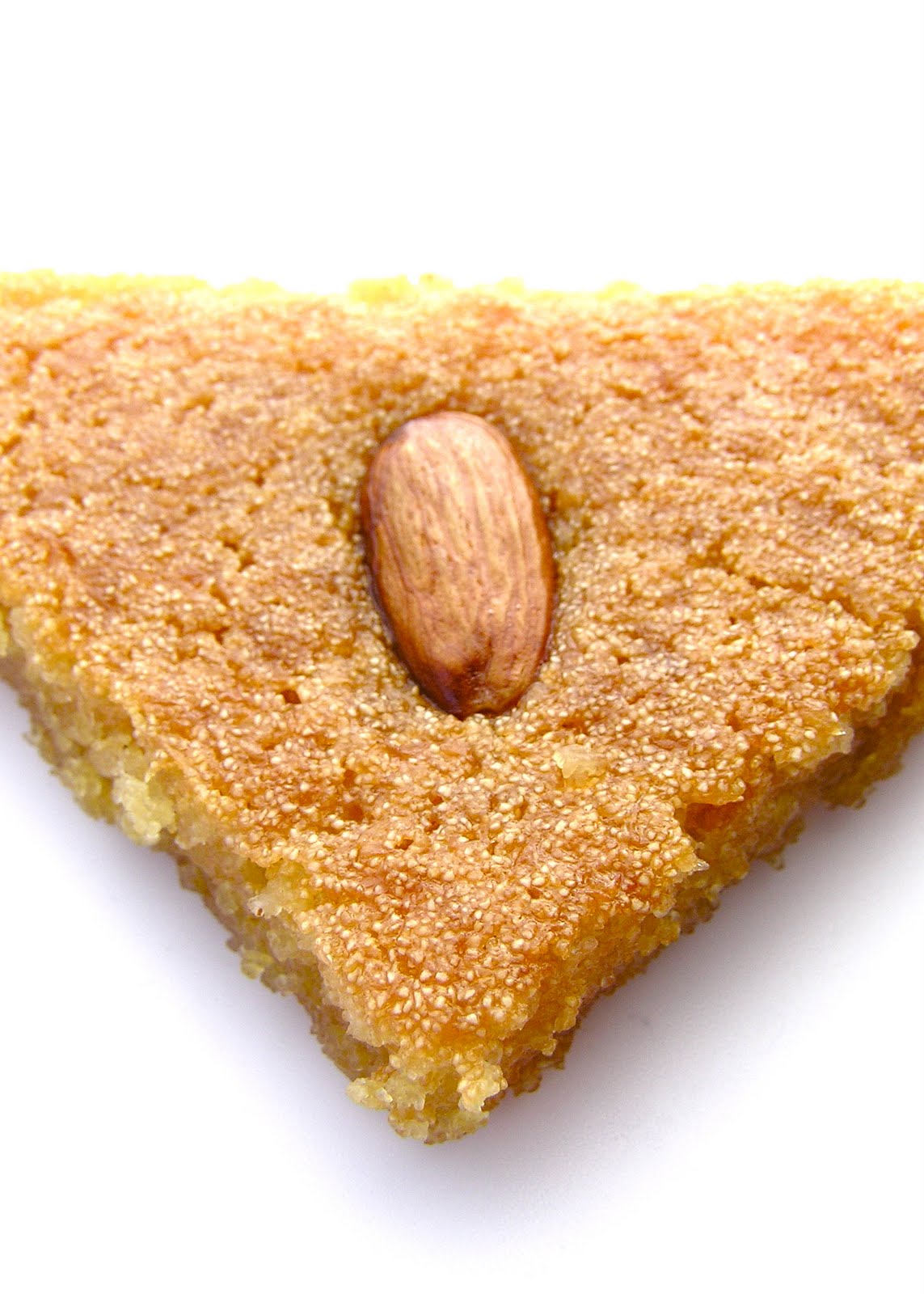
Go to Aladdin Falafel corner for the fresh and flavorful sandwiches but stay for the housemade Persian sweets.  Reevani are golden triangles that get their assertive texture from semolina, a type of course-ground flour more often boiled into submission in hot breakfast cereals.  Honey holds the whole thing together and rosewater elevates it to swoon-worthiness.

Aladdin Falafel Corner
4541 University Way NE

Seattle, WA
206 / 548-9539

Monday, August 6, 2012

Sluy's Bakery


Fatigmand (above)
Pepperkakor (below)
Sluys Bakery


Read more here: http://www.thenewstribune.com/2012/05/18/v-printerfriendly/2149054/where-the-vikings-shop.html#storylink=cp
"Giv os idag vort daglige brod."
                       -Motto on the Sluys' Bakery wall

The Norwegian immigrants who settled the area around Poulsbo in the 1880s were reportedly drawn to the familiar fjord-like contours of its hills, waterways, and distant mountains. 

If their descendants are similarly sentimental, they must be irresistibly drawn to the familiar aromas wafting from Sluy's Bakery in downtown Poulsbo's "Little Norway" commercial district.  Many of the buildings that line the narrow street are embellished with conspicuously Scandinavian touches, but for me it's the chance to "share" an experience with those pioneering Norwegians that breathes life into the town's decorative facades. 

Since 1966 Sluys has been owned and operated by the same local family.  They turn out famous products such as "Troll House" cookies, fresh "Poulsbo" bread loaves, iced sugar cookies shaped like Swedish dala horses, and "Viking Cups"--gargantuan cinnamon rolls smothered in snowdrifts of frosting. 

Pepperkakor (below) are a gingerbread cookie familiar throughout Northern Europe but particularly associated with Sweden and the winter holidays.  Each little square packs such a spicy punch it seems like hydraulics must have been involved in jamming a critical mass of cinnamon, ginger, and cloves into the dough.  The sparkling sugar topping this historic cookie harks back to the days when sugar was a rare luxury, used as a spice or garnish rather than a staple ingredient. 

On the other end of the spectrum are fatigmand (above), a palate-cleansing cookie that seems almost austere by comparison with pepperkakor.  Known as "poor man's cookies", these fried twists are crisp and restrained, relying on frying oil for a touch of richness and on the barest hint of cardamom for flavor.  Like pepperkakor, fatigmand are made in many countries, but they are most strongly linked to Norway, a country that only gained its independence from Sweden in 1905 and was known as Europe's third-world country for much of the 20th century.  Fatigmand are an edible reminder of the conditions that drove Poulsbo's founders to strike out in search of new opportunities. 

Sluys Poulsbo Bakery
18924 Front St NE
Poulsbo, WA
360/779-2798

Butterscotch Budino


 Butterscotch Budino
The Loft (at Latitude Forty Seven Seven),  $5

The Loft's butterscotch budino (Italian for "pudding") is a rich custard made in-house with generous amounts of butter and brown sugar, served with caramel sauce, whipped cream, and a sprinkle of fleur de sel. 

The Loft (at Latitude Forty Seven Seven)
18779 Front St
Poulsbo, WA
360/625-0224

Niederegger Eierliqueur Marzipan


Niederegger Eierliqueur Marzipan
Marina Market, $5.50

Although it looks like a typical convenience store from the outside, the Marina Market in downtown Poulsbo is more of a candy convention center.  Begun in 1998 with the intent of providing the area's many Scandinavian, Dutch, and European residents with the tastes of home, Marina Market offers a wide range of specialty food, with an emphasis on sweets.  The shelves of the "Licorice Shrine" groan under the aggregate weight of nearly 400 different kinds, sourced from all over the world (this selection which may soon earn Marina Market a spot in the Guiness Book of World Records).

The Market also carries a vast stock of old-fashioned and foreign candies and chocolate bars, including a range from Niederegger, a renowned German confectioner in business since the early 19th century.  Niederegger is particularly famous for its marzipan, a paste of almonds and sugar that can stand on its own in sculpted sweets, or act as a filling in pastries or bars.  Inside the bittersweet chocolate bar above, marzipan is combined with eierliqueur (aka avocaat), a German egg-based liquor.

Marina Market
18882 Front St NE
Poulsbo, WA
360 / 779-8430


Tuesday, July 24, 2012

Seabell Bakery


Seabell Roll
Seabell Bakery, $2

Seabell is a small strip-mall bakery specializing in "Japanese style" breads.  While the Japanese make and enjoy many types of bread, "Japanese style" usually indicates a matrix so light and fluffy that just looking at it makes you want to take a nap.  


Seabell's eponymous roll is an exemplar of its type:  the freshest, finest-grained hot dog bun imaginable, coiled around a core of real whipped cream and lightly sweetened red bean paste.   Astringent matcha tea sprinkled on top and stirred into the cream gives the Seabell a little bite and backbone. 

Seabell Bakery
12816 SE 38th St Ste F
Bellevue, WA 

425 / 644-2616 

Saturday, July 21, 2012

Bon Odori Kori


Kori
Seattle Bon Odori, $3 

Obon is a Japanese summer-season holiday that sees droves of city-dwellers returning to their hometowns to gather in appreciation of their ancestors; it's a homecoming for both the living and the dead.  The traditional Obon activities range from temple ceremonies to the cleaning of graves to the festive group dances known as Bon Odori.  

In Seattle, Bon Odori takes place in the street outside the Japanese Buddhist Temple.  There are displays, speeches, performances, souvenirs, dozens of dances, and--for those who've worked up an appetite or a sweat--plenty of festival foods.  

On hot days the demand for kori shaved ice cups keeps Temple volunteers on the hop.  The huge blocks of ice (below, left) have to be sawn down to the right size to fit in the ice shaving machine, then the piles of snow are rapidly packed into paper cups (below, right) and decked out with the buyer's choice of syrups (top), condensed milk, or soupy red beans. 


Thursday, July 19, 2012

Punjab Sweets


Mithai
Punjab Sweets, $4.75-10.99 per pound

When food writer Jeffrey Steingarten compares Indian sweets to cosmetics, I'm with him--but only up to a point. While he concludes that, ”The taste and texture of face creams belong in the boudoir, not on the plate,” I'd happily eat these rich and luxuriously perfumed desserts in any room of the house. 

Aptly enough, the glass cases (below) full of housemade mithai (literally "sweet things") at Pujab Sweets in Kent are as artfully arranged as eyeshadow samples at Sephora. This small shop regularly makes more than 20 different varieties, including (above, from top) besan (creamy yet earthy fudge with toasted chickpea flour), rose burfi (delicately floral fudge), rasgulla (fresh cheese soaked in syrup), coconut roll, and kalakand, (a moist but crumbly cream cake).  

The most prevalent ingredients are dairy products such as whole milk, cream, cheese, and ghee (clarified butter), and a wide range of grains, nuts, and pulses, which are used both whole and ground into flour.  Cooks can manipulate the flavor of these staple ingredients by cooking or toasting them, or by adding ingredients like coconut, rosewater, cardamom, saffron, or chocolate.  Finally, the mithai are formed with care--balls are rolled by hand, sheets are cut into regular rectangles or diamonds--and perhaps given a finishing touch, such as a sprinkle of crushed nuts or a patch of edible silver leaf. 

Mithai are an essential part of many Indian occasions and observances; although many recipes are achievable for home cooks, the labor involved, multiplied by the quantities required for big events, add up to a strong demand for professionally-made mithai.  Since 2001 the Kent valley community has been able to count on Punjab Sweets, a combination confectionery and vegetarian restaurant begun by Iqbal and Gurmit Dha and Iqbal's brother Jasbir Rai and now helmed by the Dhas' daughter, Harpreet Gill.  You can order hundreds of pieces for your wedding or Diwali celebration, or pick up a small assortment to try with your afternoon tea. 

Punjab Sweets
23617 104th Ave SE C  Kent, WA 98031
253 / 859-3236


Sunday, July 15, 2012

Bánh Bò Hấp


Bánh bò hấp
White Center Supermarket, $1.25 

 Bánh bò, or "cow cakes", are the Vietnamese version of a steamed rice cake that originated in China.  Bánh bò batter includes rice flour, coconut milk, sugar, and a leavener--traditionally yeast, but baking powder is sometimes used as a shortcut--which causes the batter to bubble dramatically when cooked.  The resulting texture is as spongy as beef liver, earning these cakes their unexpected name.  

Baked bánh bò nướng has a thin golden crust and is usually cut into wedges before serving.  Steamed bánh bò hấp are usually smaller, round, and colorful; natural extracts of pandanus or magenta plant produce pastel green or purple, whereas the neon hues of the banh bo pictured hint at artificial food coloring.  As sold in Seattle's Asian groceries, bánh bò hấp come snuggled onto a deli tray along with a tiny cup of creamy dipping sauce (coconut milk thickened with tapioca flour). 

White Center Supermarket
9828 15th Ave SW
Seattle, WA
206/768-8087


Friday, July 13, 2012

"A World of Sweets in Washington State"


2012-14 Speakers Bureau: Julia Harrison from Humanities Washington on Vimeo.

"A World of Sweets in Washington State" 

From bienenstich to bánh xu xê, marzipan to mochi, the diverse range of sweets we enjoy across Washington state reveals much about our shared history and culture.  Each sweet tells a story: ingredients illustrate trade routes and trends, recipes record migration patternsspecial forms point to special occasions. This mouth-watering, thought-provoking presentation explores the ways in which sweets reflect how individuals and communities celebrate, adapt and interact.  
 
For the next two years, I'll be offering this talk through Humanities Washington Speakers Bureau.  Interested in attending a free public presentations?  Please take a look at my schedule.   Interested in having me speak at your venue?  Humanities Washington sponsors this presentation for qualified groups; check out these application guidelines.  And should you want to find out about something other than sweets (really??) I have 27 colleagues on the current Speakers Bureau roster; learn about their specialties here. 

Saturday, July 7, 2012

Lengua de Gato


Lengua de Gato
Sweet Coconut Bakery, $5.75/12

I went to the Urban Craft Uprising summer show to check out some jewelry...and left with cookies.  I have my priorities.

Seattle's Sweet Coconut Bakery is a young company on a misson:  "to create sweet treats that might induce you to sit down, maybe put your feet up, and enjoy a cup of coffee, cocoa, or tea. Let time tick slowly, as you would if you were on vacation on a tropical island, where coconuts abound, and life is sweet."  

Sweet Coconut's treats are largely Filipino, American, or some combination of the two.  Crisp, rich little cookies that resemble cats' tongues in both shape and texture, lengua de gato are a Spanish recipe beloved in the Philippines and here given a Seattle spin with the addition of cacao nibs from Theo Chocolate.  Sweet Coconut's menu includes other well-traveled favorites such as polvorones (shortbread), pastillas de leche (cooked milk candy), sampanguita (coconut-butter cookies), macaroons, marshmallows, brownies, and peanut butter cookies.  

Available around Seattle at selected farmer's markets--and the occasional craft fair--these treats can also be Sweet Coconut treats can also be ordered from Sweet Coconut's Etsy shop.   

Wednesday, June 27, 2012

George's Bakery

 
Chocolate Thumbprint Cookie
George's Bakery, $1

A disc of buttery shortbread and a dollop of fudgy icing:  sweet, simple, and satisfying out of all proportion to its size.  The same could be said for just about anything from George's Bakery.  

Founder George Marcis was born in Greece in 1933 and immigrated to the US as a teenager; he learned English while studying at Seattle's Broadway Technical School.  In 1964 Macris and his wife Jean opened their bakery on the main street in North Bend, a small mountain town in the Olympic mountains east of Seattle.  

Until the 1978 bypass, Interstate 90 ran past the front door, delivering hungry skiers and hikers to and from the mountains.  Macris' work day started at 3am, and one North Bend resident described seeing him work "like a buzzard" to keep his cases stocked with fresh baked goods:  cracked wheat, cinnamon nut, and rye bread, danishes, doughnuts, cinnamon twists, peaked "Mount Si" loaves, and boozy rum balls.  When there weren't enough chairs to go around, patrons would happily sit on the floor with their pastries and coffee.

The Macrises commuted into Seattle to attend the St. Demetrios Greek Orthodox Church, and George's Bakery played an active role in producing goods for the annual fundraiser bazaars; in the days before an event, the bakery would host a revolving army of volunteer bakers, trying their best to meet the public's lucrative demand for specialty breads and pastries.  
Macris retired in 1993, selling the business to Greg and Cornelia Cordova.  In 2008 the business passed to current owners Kathleen Stokesbury and Joe McKeown, a third-generation baker from Pittsburgh who had previously run Seattle's Greenwood Bakery.  By all accounts, they've done little to change the formula that made George's Bakery a neighborhood hub:  the decor is still comfortably kitschy, the cases are still filled with familiar favorites. 
Macris passed away in 2008 at the age of 70; North Bend's mayor honored him with a posthumous Lifetime Achievement Award, citing his unwavering support for community members and events. 

George's Bakery
127 W North Bend Way  
North Bend, WA
425/888-0632


Other North Bend sources of notable sweets include Twedes's (below left), home of the "damn fine" cherry pie immortalized in David Lynch's Twin Peaks, and Scott's Dairy Freeze (below right), home of some damn sweet signage.